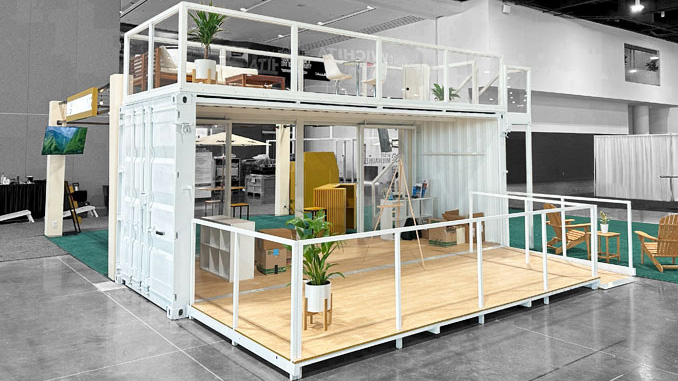
Why Shipping Container Modifications Are Perfect for Your First Retail Store
Entrepreneurs can explore endless possibilities with shipping container modifications to launch their first retail business on a budget. These durable, mobile, and flexible structures have reshaped the way businesses set up physical retail spaces. The 16-gage corten steel walls give exceptional protection against theft, weather conditions, and even unwanted pests .
Your retail container modification investment brings together economical solutions and remarkable versatility. Container stores need nowhere near the upfront investment and maintenance costs of traditional brick-and-mortar establishments. The containers’ mobility makes them ideal to test different locations and run seasonal operations. You can create unique pop-up experiences that grab customer attention. This piece shows why container modifications could be your perfect retail solution and how these steel boxes become attractive, functional stores that showcase your brand’s identity.
WHY MODIFIED SHIPPING CONTAINERS WORK FOR RETAIL
Steel warriors of the retail world, shipping containers have become a game-changing choice for entrepreneurs who want their own physical store. These reliable steel structures give remarkable advantages that brick-and-mortar stores just can’t match. Let’s get into why these metal boxes make perfect sense as your first retail space.
Durability and weather resistance
High-grade COR-TEN weathering steel makes these containers tough enough to handle the world’s harshest conditions. They’re not your average structures – they’re built to cross oceans with valuable cargo inside. This same toughness works perfectly for retail stores.
The steel build gives exceptional protection from physical damage, dust, and moisture [1]. Retailers who worry about keeping their inventory safe will love this weatherproof feature. A well-maintained container can last 25 years or more [2], making it a solid long-term investment.
These containers are incredibly tough against weather. Modified versions can handle winds up to 130 mph without anchoring and an amazing 175 mph when properly secured to a foundation [3]. You can use them almost anywhere. Fire departments even use these containers for training because they’re naturally fire-resistant [3].
Rain and snow won’t damage these containers. The special weathering steel creates a protective coating that gets stronger over time and slows down rust [3]. Your business can keep running whatever the weather throws at you.
Security for inventory and equipment
Store security might keep you up at night – but container stores help you sleep better. Nobody’s getting through that solid steel without some serious equipment [4]. You can add advanced security features like reinforced doors, heavy-duty locks, and alarm systems too [4].
These units come with specialized locks including cross-locks, bolt locks, and internal lock boxes that scare off thieves [4]. Some suppliers sell patented security locks weighing 13 pounds to keep unwanted visitors out [4].
Seasonal retailers love this security level. You can head home after work knowing the same steel walls that protect cargo on international ships are guarding your products [5].
Mobility for pop-up or seasonal stores
Container retail spaces shine brightest because you can move them anywhere. Unlike regular stores with long leases, these containers go where your customers are. You can try different spots before picking your final location.
Seasonal businesses really benefit from this flexibility. Your container store could be at the beach all summer and move to busy shopping areas during holidays [6]. Festival vendors, mobile showrooms, and pop-up shops thrive on this go-where-the-money-is approach.
Moving is simple – just load your container on a flatbed truck and head to your next location as markets change [7]. New retailers can test different areas while reaching more customer groups.
Container stores often blow up on social media too. People love their unique look and creative designs. Curious customers want to check out something different – and share it online [8].
Modified shipping containers give first-time retailers the perfect package: they’re tough enough to protect your investment, secure enough to guard your inventory, and mobile enough to follow your customers. It’s no wonder more entrepreneurs choose steel containers over traditional stores for their first retail venture.
CUSTOMIZATION OPTIONS TO MATCH YOUR BRAND
A simple shipping container can become your branded retail space with the right customization choices that show who you are. Your standard metal box serves as a canvas. You can design a store that grabs customer attention and shows what your brand stands for.
Exterior paint and signage
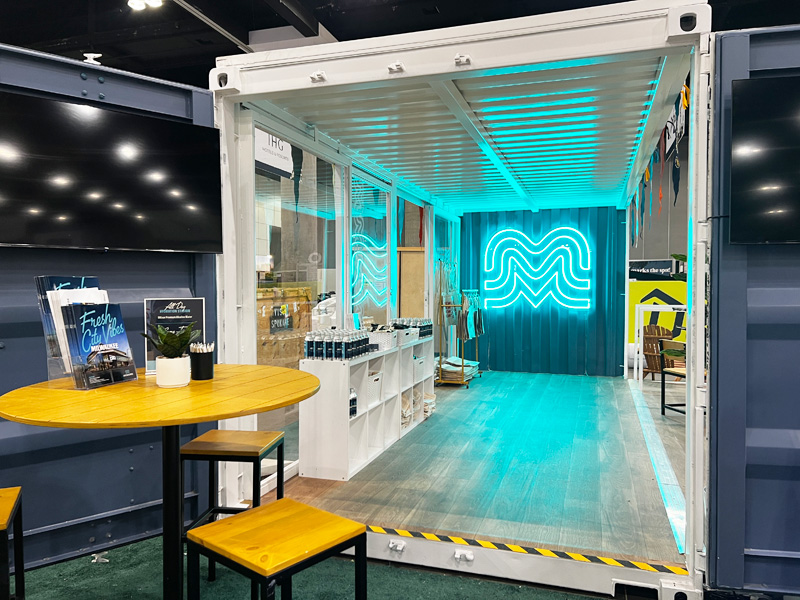
First impressions make a huge difference in retail. Custom paint jobs look great and protect from weather damage with marine-grade industrial enamel for durability [9]. You can make your container stand out with two-tone paint or accent colors [10].
Vinyl wraps and decals give you detailed, full-color designs that you can update when needed. These create a smooth, professional look [11]. Welded flat signs are a more permanent option that won’t fade or wear down over time [10].
Your signage can really stand out with the Lifted Roof Sign modification. This raises your branding so it’s easy to spot in busy areas [10]. Research from 2023 shows that stores using striking text designs with physical features like cutouts or wooden additions kept customers involved 40% longer than those with plain painted walls [12].
Interior layout and shelving
The container’s inside needs as much attention as its exterior. Modular shelving systems attach to interior “D” rings and organize your space without permanent changes [9]. This lets you adapt as your product line grows.
Wall finishes come in several options: FRP, drywall, plywood, paint, or wallpaper [13]. You can choose vinyl, hardwood, polished concrete, or carpet for flooring. Each creates a unique atmosphere that works with your merchandise [13].
Built-in furniture, desks, or even kitchenettes help use every inch of space if you’re selling food or drinks [13]. Custom display counters and adjustable racks keep your shopping area neat and organized [14].
Lighting and climate control
Good lighting reshapes the shopping experience. Track lighting and spotlights make merchandise pop [14], while LED lighting strips boost both function and style [2]. Smart lighting keeps your container visible at night—perfect for evening markets or nighttime events [10].
Climate comfort options range from simple ventilation to full HVAC systems. You can pick from air ducts, rooftop turbine vents, fixed louver vents, and exhaust fans [9]. Window AC units or commercial through-wall HVAC systems keep customers comfortable year-round [9].
Insulation plays a key role in temperature control. Spray foam insulation or insulated panels keep the internal climate steady [14]. This creates a pleasant shopping environment no matter what’s happening outside.
Windows, doors, and customer access points
Window placement changes how customers notice and use your space. Large windows or glass doors create a welcoming feel and bring in natural light [14]. Windows at 48-60 inch heights show off products at eye level [12].
You can choose from personnel doors, roll-up doors, sliding glass doors, and French doors [15]. Food or beverage shops benefit from concession windows that expand service area without extra space [16]. Bi-fold doors that open fully help draw customers inside [17].
Security features include personnel doors with security swing arms, burglar bars on windows, or heavy-duty mesh doors with locks [15]. These protect your inventory while keeping an inviting look.
Container customization shines because it’s flexible. From simple designs to complex transformations, your container grows with your brand. This creates a unique retail experience that stays with customers long after they leave.
COST ADVANTAGES OVER TRADITIONAL RETAIL SPACES
Steel containers offer huge financial advantages over traditional storefronts for entrepreneurs with tight budgets. The numbers tell a compelling story when you compare steel with conventional construction methods for your first retail venture.
Lower upfront investment
Container stores and traditional retail spaces show a striking cost difference. A used shipping container costs between USD 1,500 to USD 5,000 based on size and condition [18]. You can get a simple 20ft unit with minimal changes for about USD 20,000 [3]. Spaces with high-end finishes range from USD 30,000 to USD 80,000 [3].
Container stores cost up to 50% less than traditional construction [3], even with premium customization. Traditional retail spaces need heavy capital just for framing and structure – often more than USD 50,000 [19] before interior work begins. New retailers can use this saved money for inventory, marketing, or better customer experiences [3].
Reduced maintenance costs
Container retail spaces excel at keeping ongoing expenses low. These containers were built to handle rough ocean conditions, which means they need less maintenance [20]. Their strong steel build resists weather damage and needs fewer repairs [21].
Business owners spend less time worrying about upkeep and more time growing their business [20]. Small businesses and first-time entrepreneurs can boost their long-term profits thanks to lower recurring costs [22].
A well-maintained container can last 25 years or more, which means your original investment keeps saving you money throughout your business trip [18].
Faster setup and deployment
Container stores help eager entrepreneurs get started quickly. Traditional retail construction takes 9-15 months from planning to completion [4]. Container stores open much faster.
You can complete simple container changes in just 4 weeks [3]. Most projects wrap up within 4-12 weeks [3]. Quick deployment lets businesses:
. Generate revenue while competitors still wait for construction permits
. Take advantage of seasonal opportunities or market trends
. Try out concepts quickly
. Cut financial risks during startup
The Modular Building Institute reports that prefabricated construction like container stores makes projects 30-50% faster [4]. These structures also face 50-70% fewer weather delays than traditional construction [4]. This reliability helps with business planning.
Entrepreneurs can turn their retail dreams into reality without the long wait that comes with traditional construction.
POPULAR RETAIL USES FOR MODIFIED CONTAINERS
Retail sectors of all types have seen breakthroughs with modified containers that tap into these versatile structures’ unique advantages. Business owners now find new ways to connect with customers through these metal boxes.
Pop-up shops and seasonal kiosks
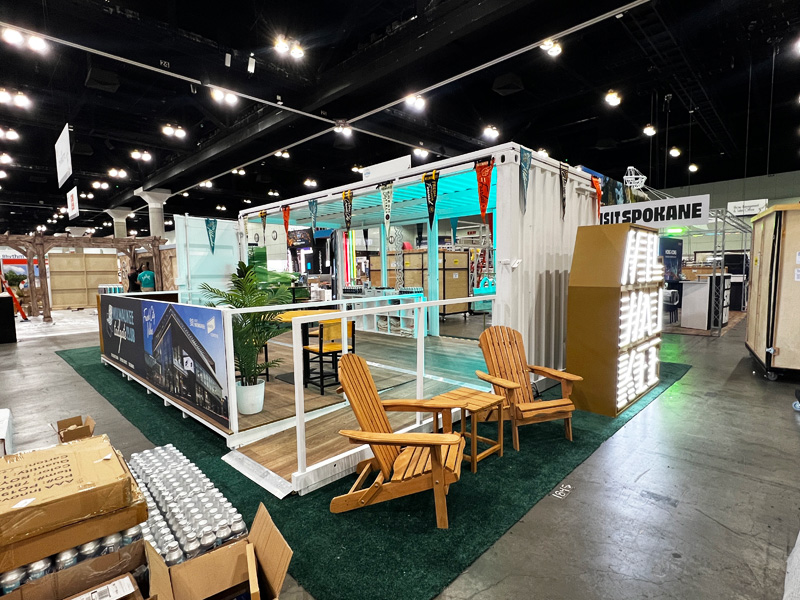
Shipping container formats make temporary retail thrive. Brands can test markets with these portable units without long-term commitments and gage customer response before investing in permanent locations [23]. Nike, Adidas, and Levi’s have launched successful container pop-ups at festivals and urban centers to boost customer participation [24]. These containers work perfectly for holiday markets, seasonal sales, and special events where mobility counts [23]. The secure design lets retailers safely store inventory overnight—a key advantage over traditional tent setups [25].
Food and beverage stands
Entrepreneurs increasingly turn containers into food service spaces. The units serve well as cafés, concession stands, and mobile kitchens [23]. Proper modifications for ventilation, plumbing, and kitchen installations turn containers into excellent temporary eateries [24]. Many stadiums, festivals, and concert venues employ container food stands with roll-up doors, counters, and service windows [8]. These modified spaces create practical yet striking concession areas that draw hungry customers [1].
Boutiques and specialty stores
Container structures make natural homes for specialty retail. Style-conscious shoppers love the industrial esthetic of fashion boutiques [24]. Retailers can add shelving, lighting, and climate control systems to create cozy shopping spaces [7]. The unique design gets more and thus encourages more social media attention—customers love to photograph and share these distinctive retail experiences [26].
Mobile showrooms and demo units
Brands now create immersive product demonstrations in container showrooms [24]. These units excel for product launches when companies need to build excitement without permanent infrastructure [27]. Car dealers, fashion houses, and electronics retailers find containers perfect for creating portable display rooms that bring merchandise to potential customers [26]. The flexibility to move these showrooms to high-traffic areas helps maximize brand exposure with minimal investment [26].
HOW TO GET STARTED WITH YOUR FIRST CONTAINER STORE
Starting a container retail space needs careful thought about practical details. Here’s what you need to know about launching your container store.
Choosing the right container size
You’ll need to pick a container size that fits your retail concept. Standard sizes include 10-foot, 20-foot, and 40-foot containers [28], while 45-foot containers are the largest you can get. High Cube (HC) containers give you an extra foot of height (9’6″ vs 8’6″), which makes customers feel less cramped [3]. Small concession stands or kiosks work great with compact 10-foot units. The 20-foot containers make perfect spaces for boutiques and cafés [29].
Working with a container modification company
Find a trusted container supplier like RCS Custom Exhibits who can help you pick and deliver to your location [30]. These experts can customize your space with windows, electricity, HVAC, flooring, paint, and storage solutions [17]. Your container modifications could take anywhere from 4-12 weeks, depending on what you want done [13].
Permits and local regulations
You can’t skip permits – most areas require them for shipping container placement [31]. Your local council should be your first stop to learn about building codes, zoning rules, and required paperwork [28]. Rules change between temporary pop-ups and permanent setups [3].
Planning for utilities and logistics
Your site needs proper clearing, grading, and drainage solutions [28]. Think about whether you need permanent utility hookups or if temporary options like generators and water tanks would work better [3]. You can set your foundation on concrete slabs, concrete piers, or wooden supports [28].
Shipping container stores give entrepreneurs a practical way to start their physical retail journey. These steel structures provide important benefits that traditional storefronts can’t match. The combination of exceptional durability, built-in security, and mobility creates an ideal foundation for retail beginnings.
New store owners find the financial benefits compelling. You can launch your container store quickly and spend less than traditional buildings that take months to construct. This helps your startup capital go further, and you can invest more in inventory and marketing instead of expensive construction costs.
On top of that, these containers let you create a space that matches your brand’s identity perfectly. The containers adapt to your specific retail vision, whether you need a sleek boutique, a bustling food stand, or a seasonal pop-up shop. Their unique look gets more customer attention and thus encourages more foot traffic without expensive advertising.
You should research local regulations and connect with experienced modification companies before starting your container store project. The process might be simpler than traditional construction, but proper planning remains key to success.
In the end, shipping container modifications give you an available entry point into physical retail without the heavy financial burden of conventional spaces. Your business can evolve, relocate, and grow as you build your customer base because of their flexibility. Container stores give entrepreneurs more than just a building – they provide a strategic advantage to bring retail dreams to life.
FAQs
Q1. How much does it cost to set up a retail store in a shipping container? The cost of setting up a retail store in a shipping container can vary widely. A basic 20ft unit with minimal modifications starts around $20,000, while a fully-featured space with high-end finishes can range from $30,000 to $80,000. This is typically 50% less expensive than traditional construction methods.
Q2. What are the advantages of using a shipping container for a retail store? Shipping containers offer several advantages for retail stores, including durability, weather resistance, enhanced security for inventory, mobility for pop-up or seasonal stores, and lower upfront investment and maintenance costs compared to traditional retail spaces.
Q3. How long does it take to set up a shipping container store? Setting up a shipping container store is much faster than traditional construction. Basic container modifications can be completed in as little as 4 weeks, with most projects finished within 4-12 weeks. This rapid deployment allows businesses to start generating revenue quickly.
Q4. What types of retail businesses work well in shipping containers? Shipping containers are versatile and work well for various retail businesses, including pop-up shops, seasonal kiosks, food and beverage stands, boutiques, specialty stores, and mobile showrooms or demo units. They’re particularly popular for temporary retail and unique brand experiences.
Q5. Do I need special permits to open a shipping container store? Yes, most jurisdictions require permits for shipping container placement and use as retail space. It’s essential to contact your local council early in the planning process to understand building codes, zoning regulations, and necessary documentation. Requirements may differ between temporary pop-ups and permanent installations.
HOW RCS CUSTOM EXHIBITS CAN HELP YOU BUILD A MODIFIED CONTAINER FOR YOUR RETAIL STORE
Using the latest CNC (computer Numerical Control) technology, our expert engineers, craftsmen and builders can personalize your container according to your needs, including cutting, wielding, painting, creating 3D signs and more. An extensive knowledge of materials and processes will help us determine the best cost-effective solution to bring your project to life according to your budget.
Our customers have been trusting our company for years and we have been providing custom builds for major trade shows, Hollywood premieres, private events and businesses from Los Angeles to Las Vegas and nationwide. Check out our modified shipping container portfolio here ->
Looking For A Modified Container For Your Retail Store?
Call our Expert at 323-378-6975 or Email us

References
[1] – https://bmarkostructures.com/portable-concession-stands/[2] – https://swmobilestorage.com/blog/shipping-container-lighting/
[3] – https://azteccontainer.com/2025/11/18/container-retail-space-complete-guide/
[4] – https://www.contekpro.com/blog/shipping-container-restaurant-deployment-time
[5] – https://integratedequipmentsales.com/grow-your-business-with-a-shipping-container-pop-up-shop/
[6] – https://www.conceptinabox.com/blog/why-temporary-seasonal-retail-concepts-work-well-in-containers
[7] – https://super-box.us/shipping-container-pop-up-shop-modern-twist-retail/
[8] – https://roxboxcontainers.com/products/concession-stands/
[9] – https://containertech.com/container-modifications/
[10] – https://www.conexwest.com/blog/how-make-your-shipping-container-stand-out-powerful-branding-advertising-solutions
[11] – https://pagest.com/the-art-of-container-signage-branding-and-customization-techniques/
[12] – https://www.yuzehousing.com/Container-Shop-Design-Ideas-Attract-Customers-With-Creative-Exteriors
[13] – https://www.conexwest.com/blog/custom-shipping-container-modification-conexwest-builds-business-retail-living
[14] – https://osgcontainers.com/en-id/blog/how-to-turn-a-shipping-container-into-a-stylish-and-functional-retail-space/
[15] – https://www.advancedcontainer.com/shipping-container-modification/shipping-container-doors-and-windows/
[16] – https://www.mobilemodularcontainers.com/blog/shipping-container-windows
[17] – https://a-american.com/container-conversions-for-retail/
[18] – https://greenboxtainer.com/comparing-costs-container-conversions-vs-traditional-construction/
[19] – https://www.conexwest.com/blog/how-much-does-shipping-container-shop-cost
[20] – https://rfbcontainers.co.uk/10-reasons-to-invest-in-a-container-shop/
[21] – https://www.eveoncontainers.com/en-US/news/market-insights/innovative-ways-entrepreneurs-are-transforming-shipping-containers-into-thriving-businesses
[22] – https://a-american.com/shipping-container-pop-up-shops/
[23] – https://bmarkostructures.com/shipping-container-pop-up-stores/
[24] – https://usacontainers.co/blogs/repurposing-shipping-containers/shipping-container-pop-up-shops-the-future-of-mobile-retail?srsltid=AfmBOopzpDFx_QoPGSX_cfzXUBcIZpYyRtXleBK-jT76jnFpcl6b1QWj
[25] – https://conterm.ca/en/blog/10-reasons-to-use-a-shipping-container-for-pop-up-kiosks-retail-shops/
[26] – https://www.tradecorp-usa.com/blog/a-shipping-container-pop-up-display-room-to-grow-business/
[27] – https://britteninc.com/blog/articles/7-ways-to-use-custom-shipping-containers-at-live-events
[28] – https://www.conexwest.com/blog/guide-building-shipping-container-shop
[29] – https://bmarkostructures.com/areas-served/georgia/atlanta/
[30] – https://containertech.com/articles/how-to-use-a-storage-container-for-retail-pop-ups/
[31] – https://www.mobilemodularcontainers.com/blog/shipping-container-building-permit