How to Make Your Trade Show Booth Stand Out (And Why a Custom Exhibit Makes the Difference)
Walk any trade show floor and you’ll see the same problem repeated a hundred times: rows of nearly identical booths, each with a retractable banner, a folding table, and a bowl of mints. Attendees develop tunnel vision fast. If your booth looks like everyone else’s, it’s invisible — no matter how good your product is.
Standing out isn’t about spending the most money. It’s about making a handful of deliberate choices that most exhibitors skip — starting with the booth structure itself. Here’s how to do it.
Why a Custom Exhibit Is Essential
Rental booths and modular kits are convenient, but convenience is exactly why they blend in — the same panel systems and pop-up frames show up at booth after booth, show after show. A custom exhibit is built around your brand’s specific dimensions, story, and goals rather than squeezed into a generic template, which means every wall, light fixture, and traffic path is working toward the same objective: getting people to stop and engage.
Investing in a custom exhibit also pays off beyond a single event. A well-designed custom exhibit is modular enough to reconfigure for different booth sizes and floor plans, so the same core investment can serve a 10×10 space at a regional show and a 20×20 island at a major conference. Over multiple shows, that flexibility — plus the brand recognition that comes from a consistent, distinctive presence — often makes a custom exhibit more cost-effective than repeatedly renting generic setups that never quite fit and never quite look like you.
1. Design for the 10-Foot Glance
Most people will see your booth from ten feet away for about three seconds before deciding whether to walk over. That means your signage can’t explain your product — it has to create curiosity or communicate value instantly.
. Skip your company name in giant letters. Nobody stops walking because they recognize a logo they’ve never heard of.
. Lead with the problem you solve or the outcome you deliver, in five words or fewer. “Cut Onboarding Time in Half” beats “Innovative HR Solutions.”
. Use one bold color that contrasts with the convention carpet and neighboring booths, not five competing ones.
2. Build an Experience, Not a Display
Booths that generate foot traffic almost always give people something to do, not just something to look at.
. Live demos beat static displays every time. If your product is digital, put it on a big screen and let people drive it themselves.
. Interactive elements — a spin wheel, a quick quiz, a hands-on product sample, a VR headset — create a reason to stop that has nothing to do with a sales pitch.
. Games and challenges work well because they draw a crowd, and crowds attract more crowds. A leaderboard on a screen keeps people engaged and creates return visits.
The goal is to lower the barrier to interaction. “Can I show you something?” is a much easier yes than “Can I tell you about our platform?”
3. Use Height and Light Deliberately
Most booths are visually flat — a table, a banner, some brochures. Height changes that instantly.
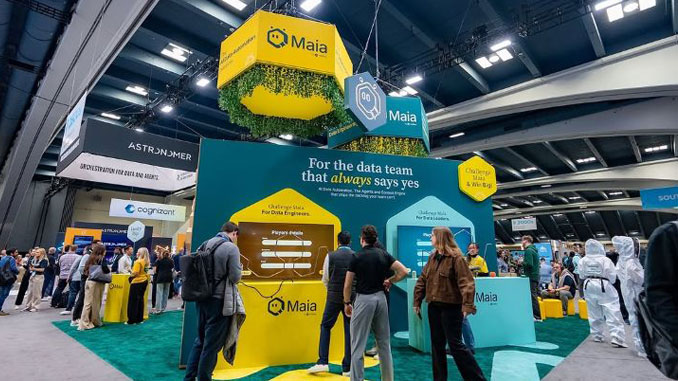
. Hanging signage above the booth can be seen from across the hall, well beyond your assigned square footage.
. Layered structures (a raised platform, a tall backlit wall, suspended graphics) make a small footprint feel larger and more premium.
. Lighting is underused and cheap to fix. Warm spotlighting on a product or an LED-lit sign draws the eye far more effectively than standard overhead fluorescents.
4. Rethink Your Giveaways
Branded pens and stress balls end up in a hotel trash can by dinner. If you’re going to give something away, make it something people actually keep or talk about.
. Useful items tied loosely to your brand (a portable charger, a good notebook, quality socks) get used long after the show and keep your logo in rotation.
. Consumables with a twist — specialty coffee, local snacks, a custom cocktail at a happy hour — create a sensory hook that’s hard to replicate with print materials.
. Consider skipping mass giveaways entirely and instead offering something of real value to serious leads only: a free audit, a personalized report, or early access to a feature.
5. Train Your Staff to Not Ambush People
Booth staff can make or break the experience, and “Hi, how are you today?” while lunging toward a badge scanner is the fastest way to make someone speed up their walk.
. Staff should be trained to ask open, specific questions related to the visitor’s role or industry, not generic icebreakers.
. Standing in a loose semicircle rather than a wall blocking the entrance makes the booth feel approachable instead of like a gauntlet.
. Put your most knowledgeable, energetic people at the front. Technical experts who can go deep should be available but don’t need to be the first face people see.
6. Make the Booth Instagrammable
Attendees document trade shows constantly — booth walkthroughs, product shots, selfies with mascots or oversized props. A booth with one genuinely photogenic element (a bold backdrop, a striking sculpture, a clever photo op) turns visitors into free marketing the moment they post.
Add a hashtag or a small prize for tagging your company, and you’ve turned foot traffic into social reach without spending on ads.
7. Differentiate Through Positioning, Not Just Aesthetics
Sometimes the loudest booth on the floor isn’t the one that wins. If your competitors are all doing flashy, high-energy setups, a calm, minimalist booth with a clear, confident message can stand out precisely because it’s different.
Look at what your direct competitors are doing at the same show, if you can find out in advance, and deliberately zig where they zag — in color, in tone, in layout.
8. Follow Up Like the Booth Was Just the Opening Line
A booth that stands out on the floor but gets a generic “great meeting you” email afterward wastes most of its value. Reference the specific conversation, the demo they tried, or the game they played. That continuity reinforces the impression you worked hard to create in the first place.
The Bottom Line
A standout trade show booth isn’t the one with the biggest budget — it’s the one that gives people a reason to stop, something to do once they’re there, and a reason to remember it afterward. Nail the ten-foot glance, build in an experience, and train your team to engage rather than pounce, and you’ll outperform booths twice your size.
None of that works as well inside a generic rental shell. A custom exhibit gives you the structural freedom to execute on height, lighting, and interactive elements exactly the way your brand needs, which is why most exhibitors who consistently stand out on the show floor are working from a custom exhibit rather than an off-the-shelf kit.
FAQs
Q1. How much does a custom exhibit cost compared to a rental booth? A custom exhibit typically costs more upfront than a one-time rental, since you’re paying for a structure designed and built specifically for your brand. However, because it’s reusable and reconfigurable across multiple shows, the cost per event often ends up lower than repeated rentals over time — especially once you factor in the brand consistency and lead-generation lift a distinctive booth provides.
Q2. How far in advance should I start planning my booth design? For a custom exhibit, most exhibitors start the design and build process three to six months before the show, depending on the complexity of the structure. Simpler updates or refreshes to an existing custom exhibit can often be done in four to six weeks, but a full build from scratch needs more lead time for design approval, fabrication, and shipping.
Q3. What’s the single most impactful change I can make on a limited budget? Lighting is usually the highest-impact, lowest-cost upgrade. Well-placed spotlighting or backlit graphics can make even a modest booth look premium and draw attention from across the hall, without the expense of a full structural rebuild.
Q4. Do I need a custom exhibit for every show, or just larger ones? It depends on your show calendar. Many companies use a modular custom exhibit that scales up or down — the same core components reconfigure into a small 10×10 footprint for regional events and expand into a larger island booth for major conferences, so you’re not maintaining two entirely separate builds.
Q5. How do I measure whether my booth design is actually working? Track metrics beyond just badge scans: dwell time (how long people stay), engagement rate (percentage of walk-by traffic that actually stops), and qualified conversations per day. Comparing these numbers to previous shows, especially before and after switching to a custom exhibit, gives you a clear read on whether the design changes are paying off.
Building Custom Trade Show Booths That Will Make You Stand Out
RCS Custom Exhibits, based in Los Angeles, has built its reputation on handling the full custom exhibit process from concept to show floor, and that end-to-end expertise is what separates a booth that truly stands out from one that just looks fine.
Our design team specializes in 3D modeling and visualization, turning a client’s ideas into realistic renderings before a single piece is built, so the concept can be refined early. On the construction side, our deep knowledge of materials and fabrication methods lets them execute everything from display walls, hanging signs, and backlit or neon signage to custom flooring, furniture, and even built-in meeting or storage rooms — all tailored to the client’s budget rather than forced into a generic template.
Our expertise carries through to transportation and installation as well, where our team manages delivery and setup for shows ranging from regional events to major national conventions like CES and NAB Show. It’s this combination — design, fabrication, and logistics all handled by one experienced team — that lets RCS Custom Exhibits consistently deliver booths built to make brands stand out on the floor.