Trade Show Booth Design FAQ: What Exhibitors Need to Know
A trade show booth has seconds to stop someone mid-aisle. Whether you’re exhibiting at CES, NAB Show, a regional expo, or your first industry conference, the design decisions you make early affect your budget, your traffic, and your results. Here are the questions exhibitors ask most.
Planning Your Booth
Where should I start when designing a trade show booth?
Start with your goals, not your graphics. Decide what the booth needs to do: generate leads, demo a product, launch a brand, close deals in meetings, or all of the above. Then gather the practical constraints: your budget, the show’s booth size and location, the show’s rules, and your timeline. A designer can turn those answers into a concept much faster than they can work from “make it look cool.”
How do I choose the right booth size and layout?
Size is set by what you book with the show organizer, but layout is yours to control. Common configurations include:
- Inline booths sit in a row with neighbors on both sides, so you have one open face to the aisle.
- Corner booths are open on two sides and draw traffic from two aisles.
- Peninsula and island booths are open on three or four sides, giving you the most visibility and layout freedom.
Match the layout to your needs. A product demo needs open sightlines and room for a crowd. A sales-focused booth may need a quiet meeting area.
What elements should every booth include?
Most effective booths combine these elements:
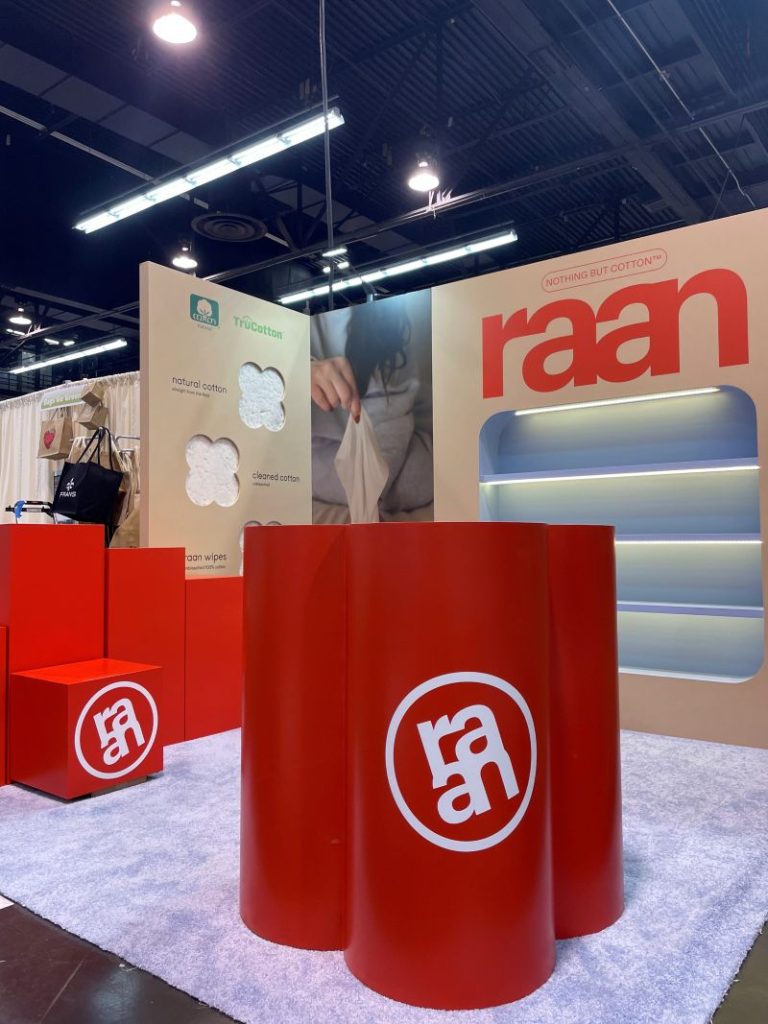
- Strong, readable branding that visitors can understand from the aisle
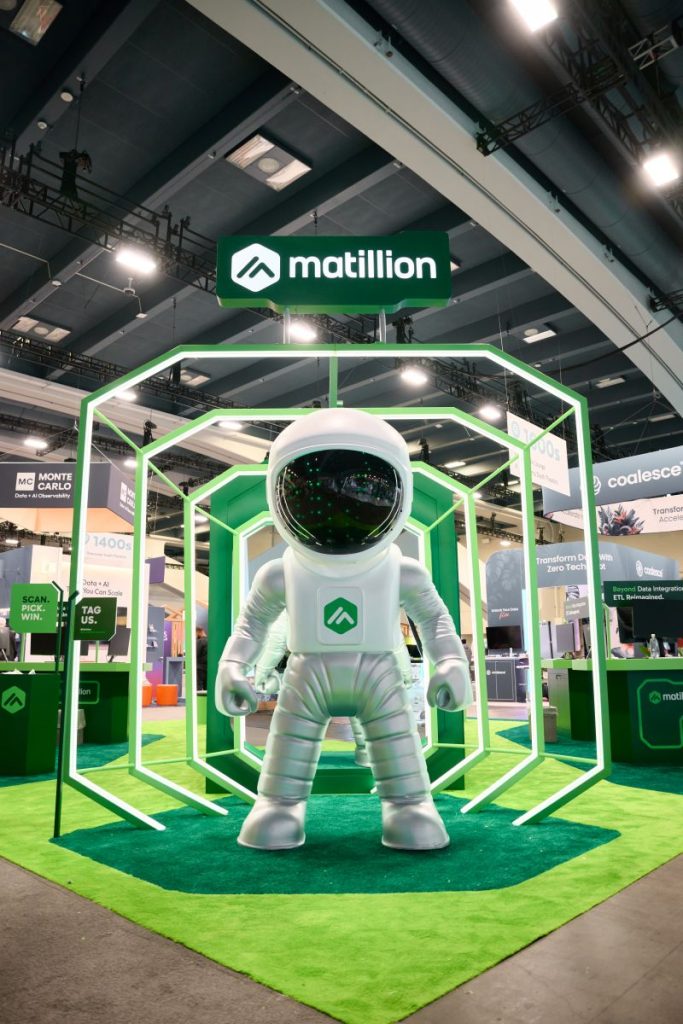
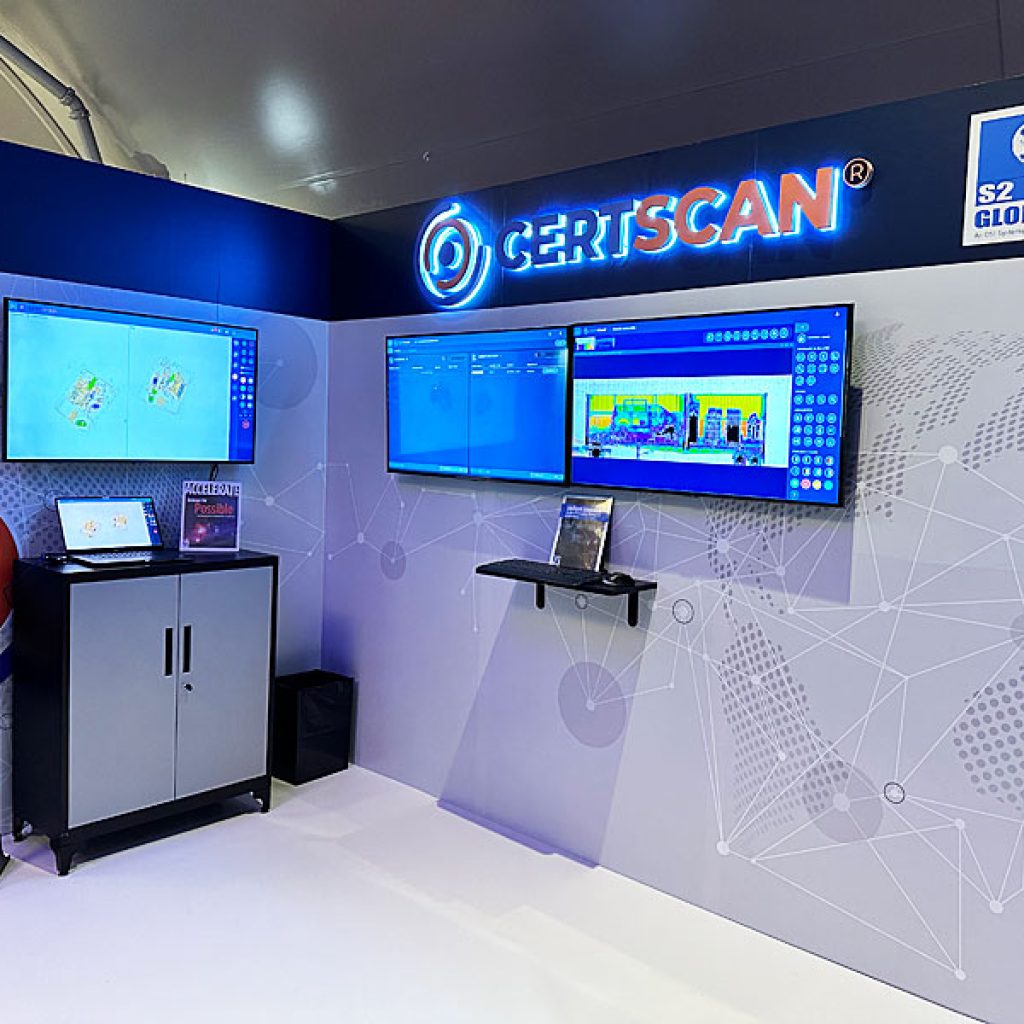
- A clear focal point, such as a hero product, an interactive display, or a dramatic sign
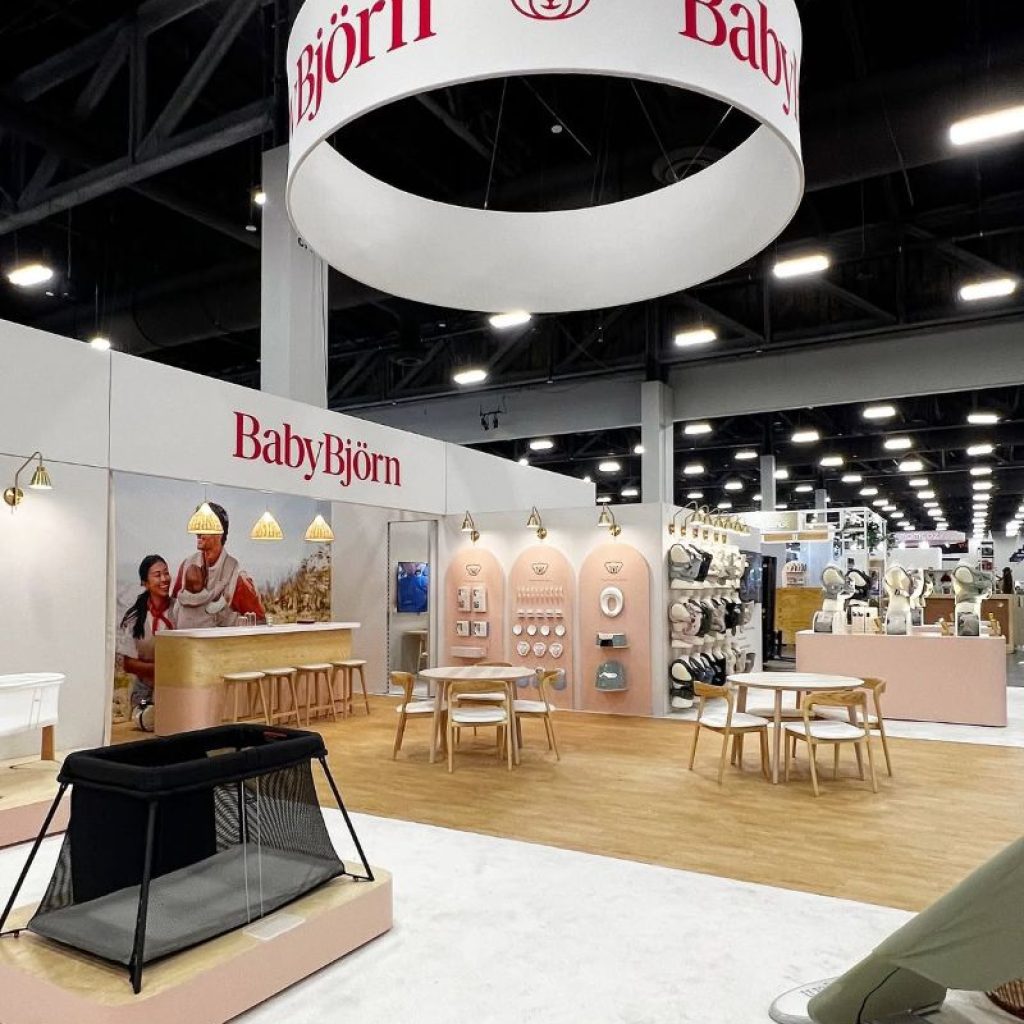
- A functional layout that gives staff room to engage visitors and guides traffic through the space
- Defined zones, such as a demo area, a meeting room, and storage for materials and personal items
- Good lighting, because a well-lit booth stands out in a bright, busy hall
Design and Visualization
Why do I need 3D renderings before building?
Because they let you see the booth before you pay to build it. Realistic 3D renderings show you how the space will look, how visitors will move through it, and whether the branding reads at a distance. They also make it easy to share the concept with stakeholders and catch changes while they’re still cheap. Designers commonly use tools like Rhino 3D, 3ds Max, SketchUp, and Revit to produce them.
How do I make my booth stand out in a crowded hall?
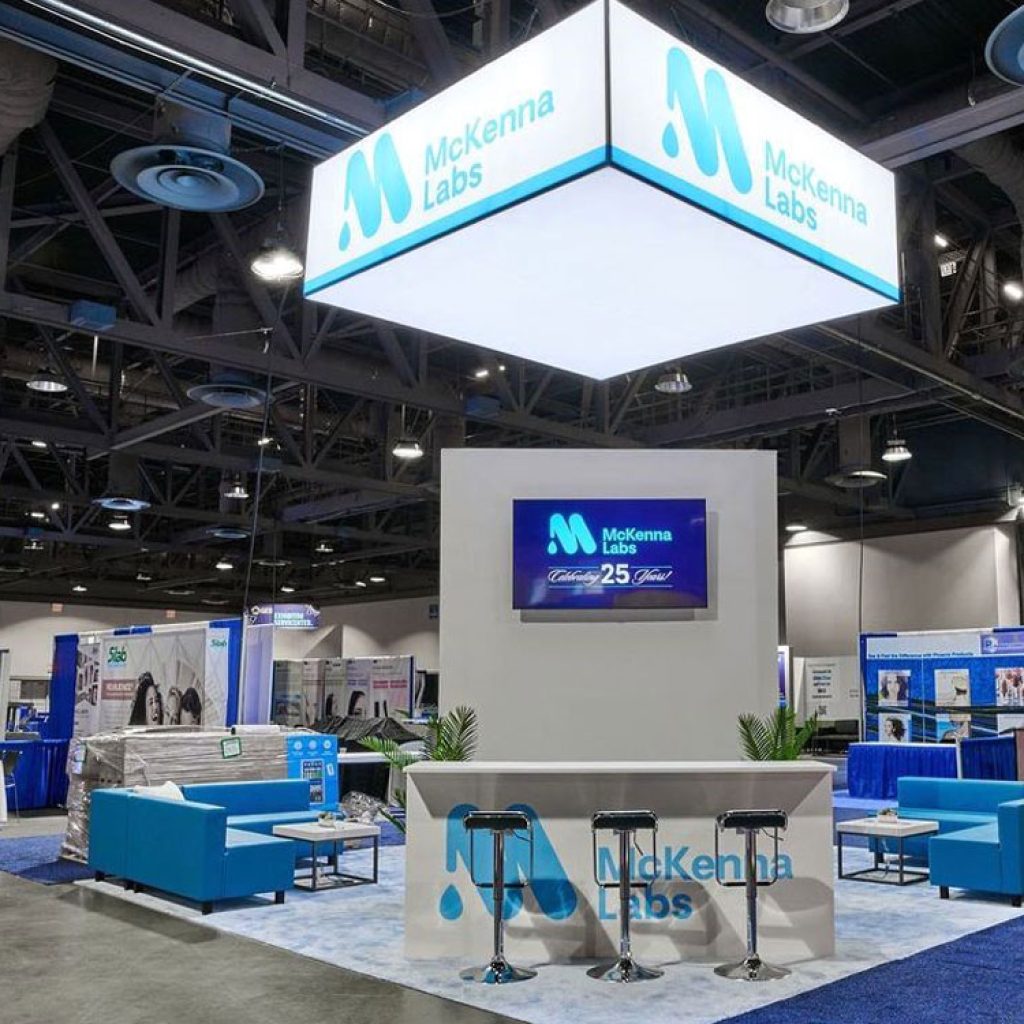
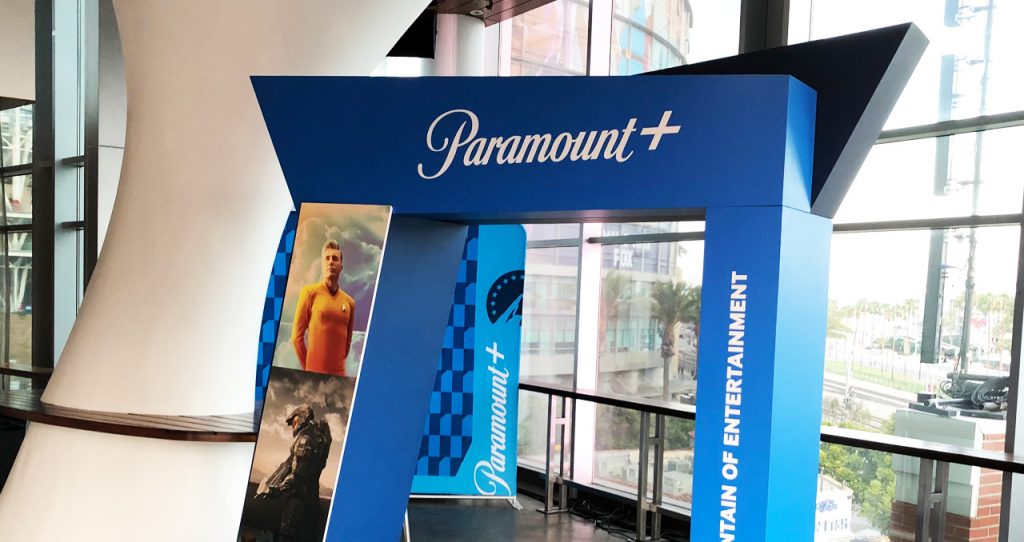
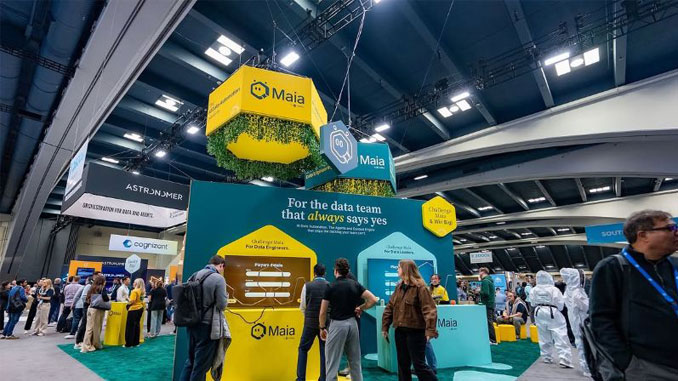
- Go vertical. Hanging signs and tall structures read from across the hall.
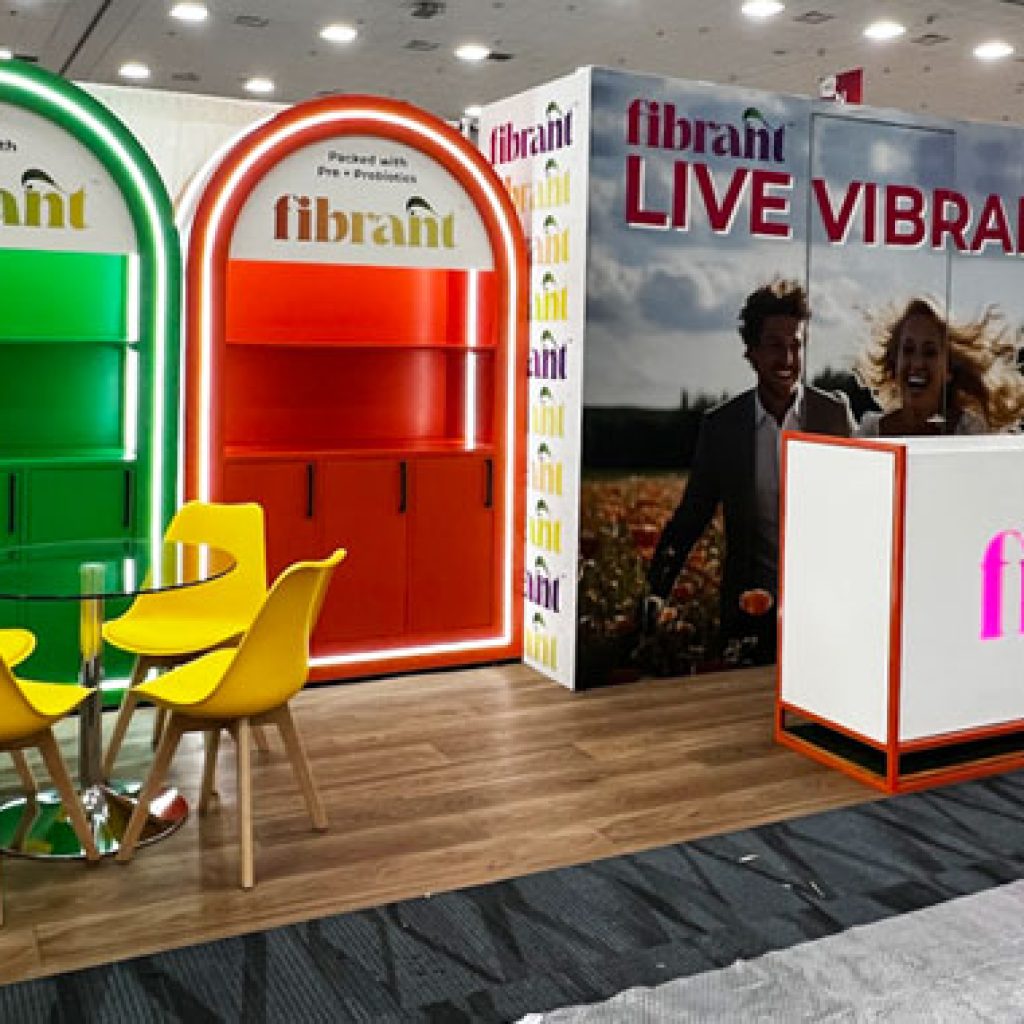
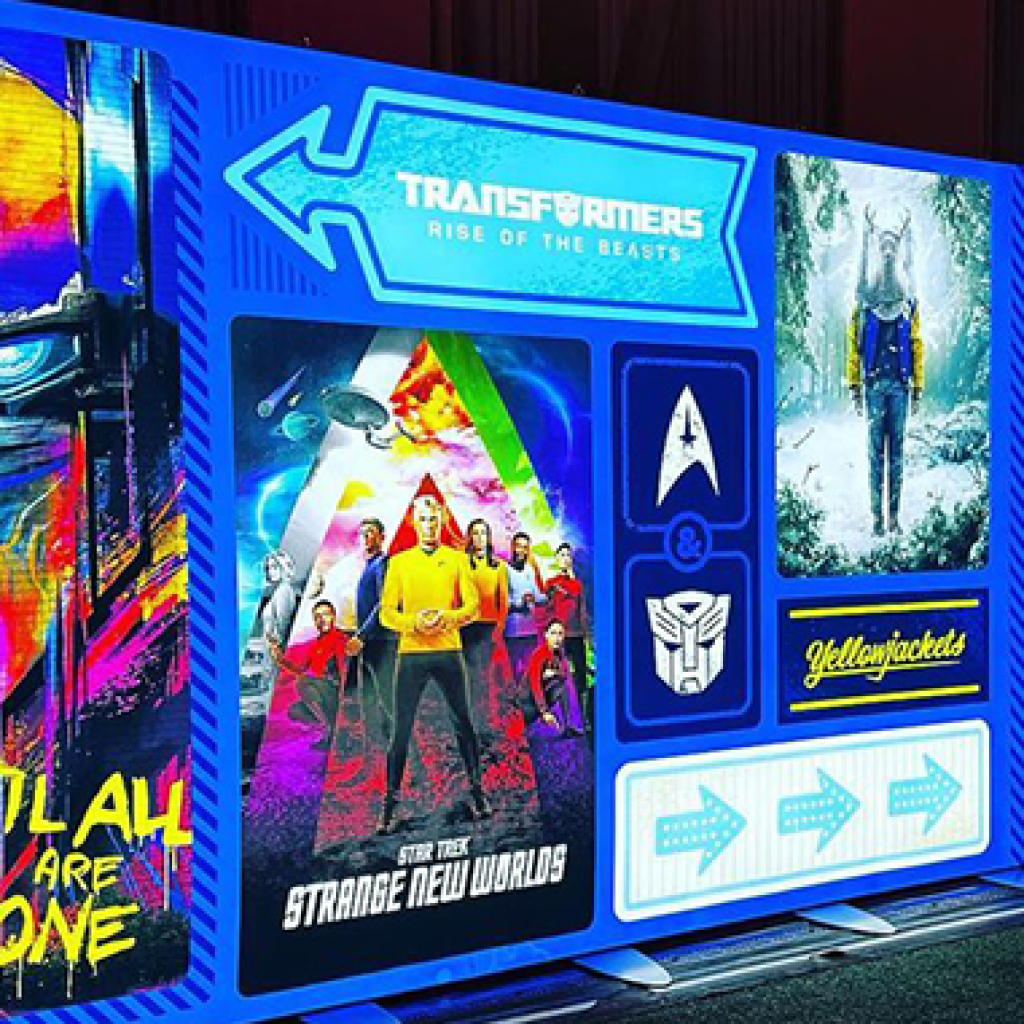
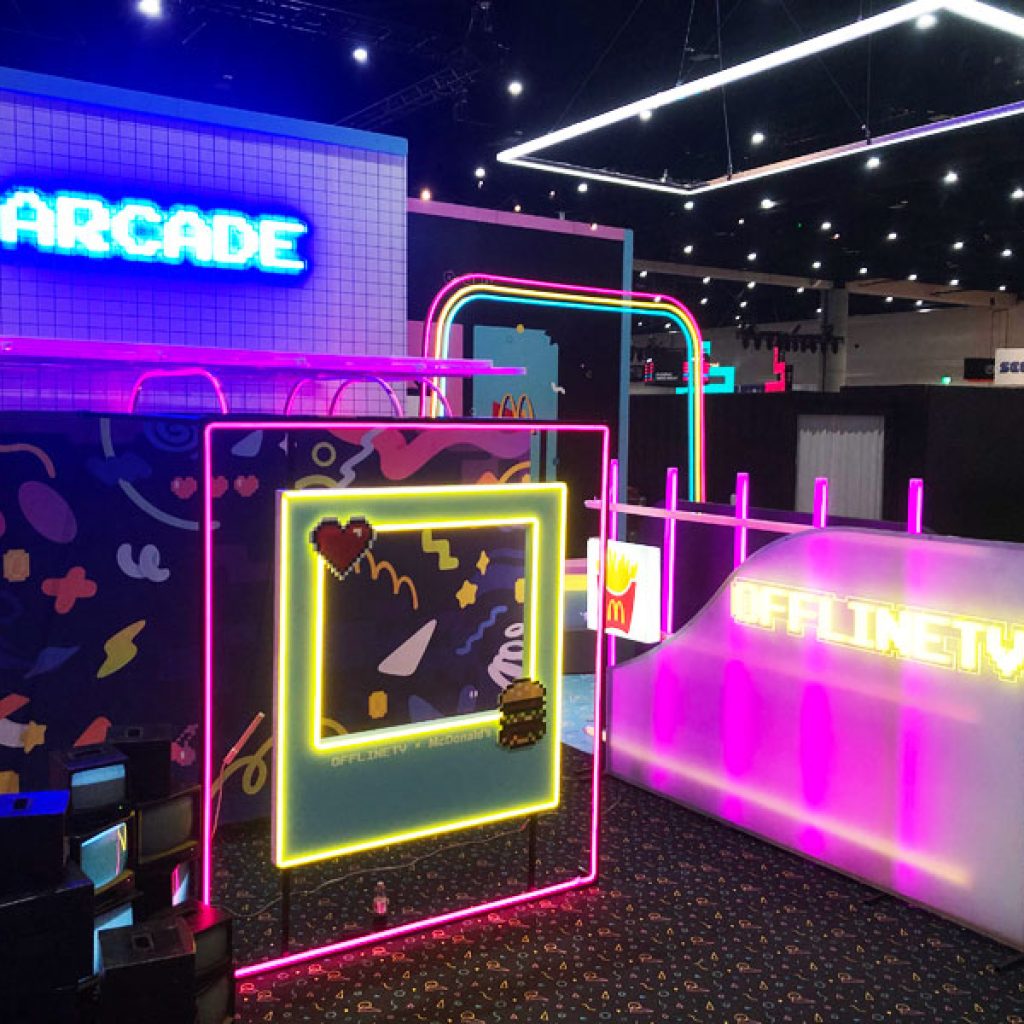
- Use light. Backlit signs, neon, and lit graphics pull the eye.
- Add dimension. 3D signs, logos, and dimensional letters feel more substantial than flat prints.
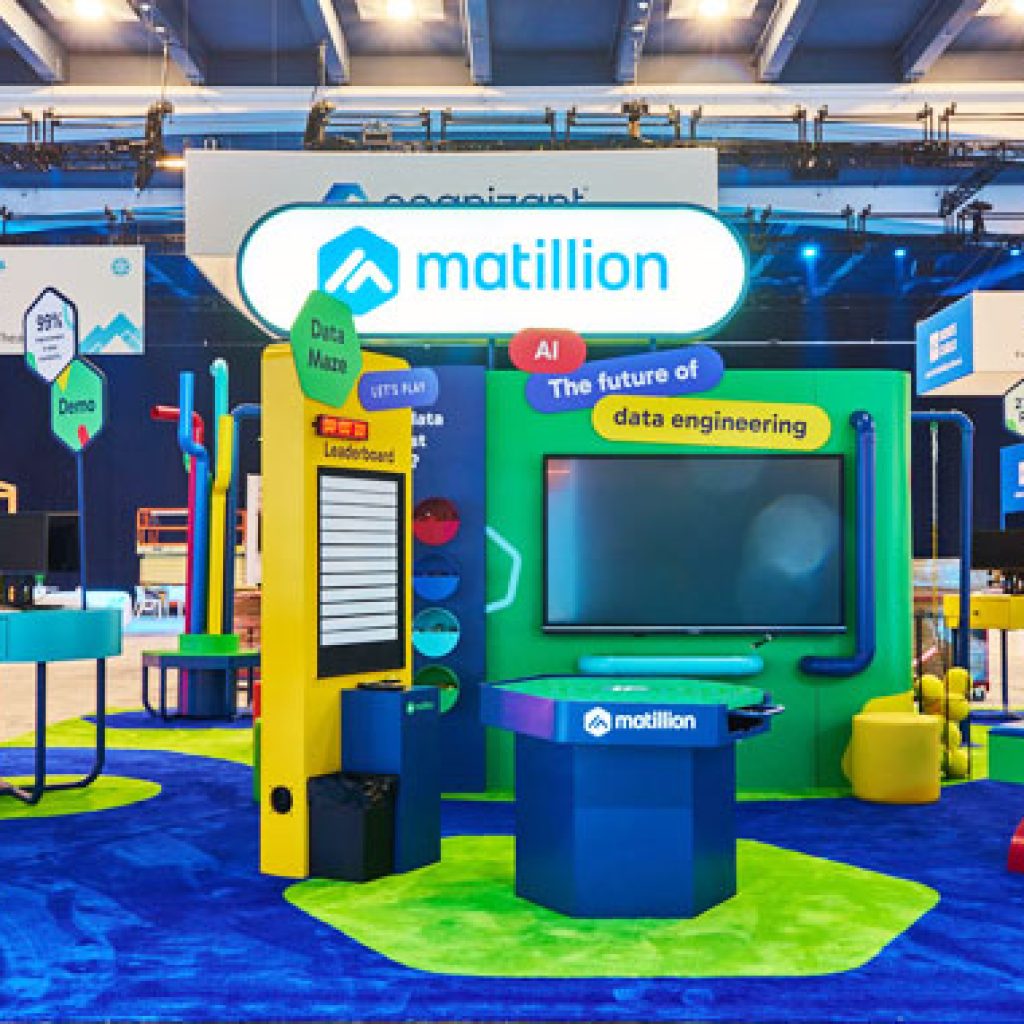
- Give people something to do. Gaming pods, interactive displays, and demos invite people in rather than asking them to read.
- Keep the message simple. One clear headline beats a wall of text.
How much text and branding is too much?
Visitors decide whether to stop in just a few seconds, so lead with one core message and your logo. Put details inside the booth, where people have already stopped. Large, high-contrast graphics work better than small print.
Construction, Materials, and Budget
What is a custom booth made of?
Custom exhibits are usually built from a mix of components, including booth walls and display walls, flooring, glass windows, signs, furniture, and meeting or storage rooms. The best mix depends on your goals and budget, and an experienced builder can recommend the most cost-effective materials and construction methods for your design.
Should I buy a custom booth or rent components?
It depends on how often you exhibit. If you attend one or two shows a year with a stable brand, owning a custom booth can make sense. If your shows vary in size, you want a fresh look each time, or you’re testing a new market, renting items such as flooring, furniture, and display walls keeps costs flexible. Many exhibitors combine the two, owning their core structure and renting the rest as needed.
How can I keep my booth within budget?
- Set a realistic budget before design begins, so the concept fits it.
- Prioritize where visitors will look: signage, focal point, and flooring have more impact than small details.
- Choose materials suited to your actual use, not the most expensive option.
- Work with a builder who handles design, fabrication, and installation together, to avoid handoff delays and surprise costs.
- Plan early. Rushed timelines usually cost more.
What about flooring and furniture?
Both affect first impressions and comfort. Flooring defines your space and makes it feel finished, and it makes long show days easier on your staff. Furniture creates inviting places for conversations and meetings. Both are commonly rented rather than purchased.
Logistics and Show Day
Who handles shipping and setup?
Ideally, your booth partner. Full-service builders manage design, fabrication, transportation, and installation, so your team can focus on preparing for the show rather than coordinating vendors. Ask any builder you’re considering whether those services are included or billed separately.
What should I do before the show opens?
- Confirm your booth location and the show’s installation schedule.
- Review the exhibitor manual for rules on height, electrical, rigging, and signage.
- Make sure graphics are final and approved before production.
- Confirm lead capture tools, demos, and technology work on-site.
- Brief your booth staff on your goals, key messages, and how to qualify leads.
What are the most common booth design mistakes?
- Too much text and not enough focal point
- Cluttered layouts that block aisle access or sightlines
- Poor lighting
- Ignoring the show’s rules until late in the process
- Not leaving room for conversations and meetings
- Waiting too long to start, which limits options and raises costs
Why RCS Custom Exhibits Should Design and Build your Trade Show Booth
RCS Custom Exhibits is a Los Angeles-based trade show booth company that works with clients locally and nationwide. Our team of designers, engineers, and builders handles everything from small custom booths to large, complex exhibits, as packages or individual services, depending on what you need. Our designers specialize in 3D modeling and visualization, using Rhino 3D, 3ds Max, SketchUp, and Revit to produce realistic renderings, so you can approve your booth before it’s built. Our builders know materials and processes well, and they work with your budget to find the most cost-effective way to bring the design to life.
We can supply flooring, furniture, display walls, meeting and storage rooms, glass windows, 3D and dimensional signs, hanging signs, backlit and neon signs, gaming pods, banners, and plexiglass dividers. We also manage transportation and installation, taking your project from design through fabrication to the show floor.
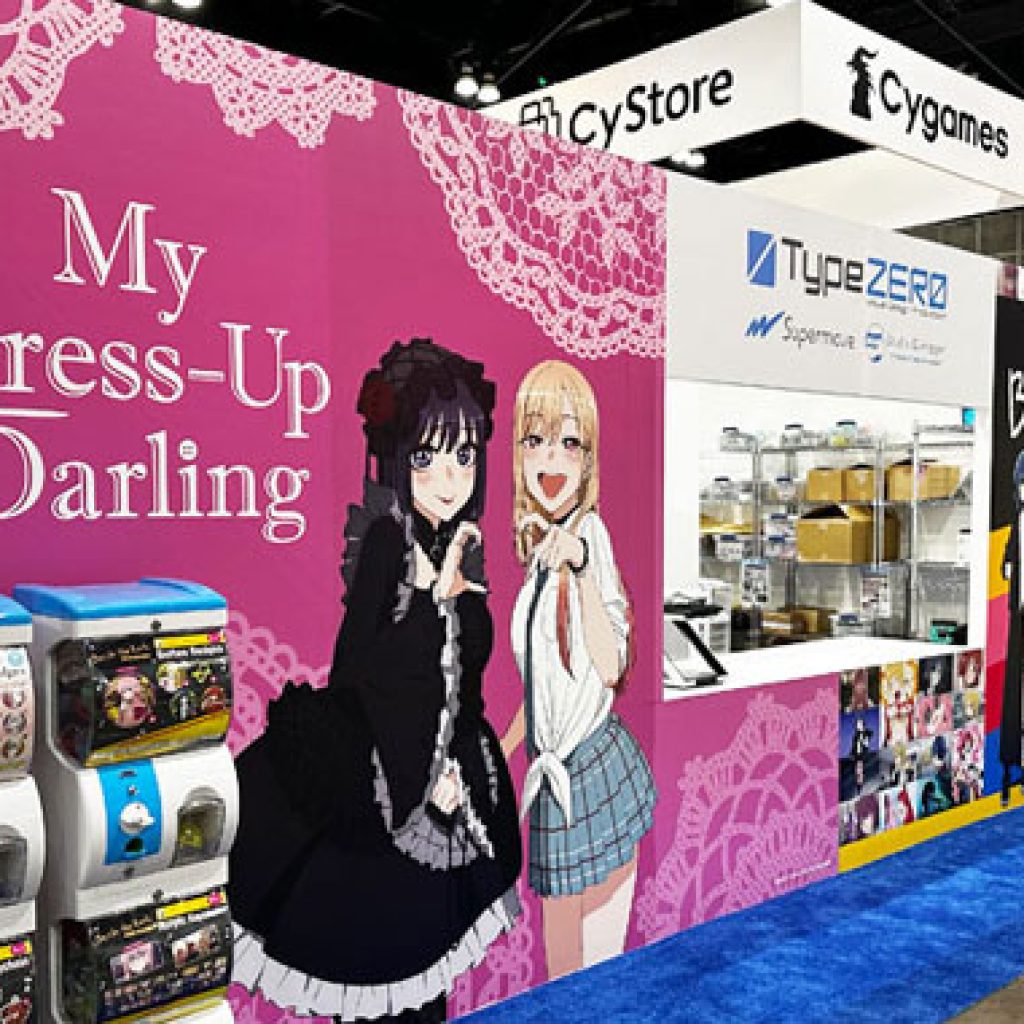
Our exhibits have drawn crowds at CES, NAB Show, E3, PlayStation Experience, Anime Expo, and Natural Products Expo West, with installations across Los Angeles, Las Vegas, San Diego, San Francisco, Chicago, New Orleans, and more. You dream it, we build it.