17 Surprising Modified Shipping Container Uses You Never Thought Possible
When you picture a shipping container, cargo transport probably comes off the top of your head. These steel structures have developed way beyond their original purpose though. Made from 14 gage corrugated COR-TEN steel and built to withstand harsh weather conditions[54], shipping containers are now being transformed into everything from homes and cafes to swimming pools and bridges[55]. We’ve compiled 17 creative shipping container ideas that showcase how repurposed shipping containers are changing construction and retail. These versatile structures offer durability, portability, and sustainability for innovative applications.
Container Homes and Tiny Houses
What Makes Container Homes Unique
Container homes built from steel shipping containers have become a practical housing alternative. The modular nature allows creative configurations and expansions. Structures range from single 20-foot units (160 square feet) to multi-container designs. High cube containers offer 9.5-foot ceilings[56] and provide room for insulation and utilities above drop ceilings while maintaining a spacious feel.
Steel construction delivers durability designed to handle all weather conditions[57]. Sustainability appeals to builders who care about the environment, as repurposing containers reduces construction waste and promotes recycling[57]. Construction and demolition contribute around 40% of US waste. Container homes can reduce this by a lot[58].
Key Design Features and Customization Options
Strategic window placement on multiple sides allows natural light penetration and reduces reliance on artificial lighting[57]. Skylights introduce vertical light sources that brighten interiors and create an open atmosphere. Open floor plans combine kitchen, dining and living areas while eliminating unnecessary walls[57].
Interior cladding uses cement sheets resistant to cracking, warping and external damage[57]. These sheets provide insulation properties that keep interiors warm in winter and cooler in summer. They resist mold and moisture. Exteriors feature corten steel improved with marine-grade paint that is UV resistant. The paint handles rain and hail without rusting and resists chipping and peeling[57].
Customization has gas-lift double beds for additional storage, wall beds, open shelves, underbed storage and built-in cupboards[57]. Karndean luxury planks copy natural wood and stone while offering waterproof, easy-to-clean flooring[57].
Cost Benefits and Construction Timeline
Building costs in the US range between $15,000 and $175,000[59]. Used cargo-worthy containers cost $1,500 to $3,000, while new containers run $3,000 to $5,000[59]. Container homes may cost 20-40% less than traditional homes[56].
Construction timelines span several phases. The permit and design finalization stage takes 9-12 weeks[60] and represents the longest phase. Site preparation and foundation work follow. The prefabricated nature cuts overall construction time compared to conventional builds[57].
Pop-Up Retail Shops and Boutiques
Why Repurposed Shipping Containers Work for Retail
Repurposed shipping containers have changed mobile retail since the early 2000s[61]. The pop-up industry brings in over $10 billion in sales across the United States[62]. Projections reach $80 billion annually[63]. These ready-made structures eliminate time-consuming construction processes that burden traditional storefronts. Businesses receive complete shells that need only customization with shelving, lighting, and branding before opening.
Portability stands out as a defining advantage. Containers move via truck to festivals, markets, or high-traffic urban areas and then relocate based on seasonal demand or market testing needs. To cite an instance, brands can chase summer crowds one month and winter shoppers the next without long-term lease commitments. Cities recognize this potential and support container projects through grants and public-private partnerships to activate vacant spaces and build walkable downtowns[64].
Consumer response confirms the approach. Research shows 74% of shoppers hold more positive brand impressions after attending experiential marketing events like pop-up stores[63], while 70% find new products and brands through these temporary setups[63]. The perceived temporary nature creates urgency and encourages spontaneous purchases.
Design Flexibility and Branding Opportunities
Shipping container ideas offer blank canvases for brand expression. Businesses apply RAL color resprays, wood cladding for premium finishes, large-format printed graphics, and company logos to transform industrial steel into marketing assets. Lands’ End designed their unit with beach house esthetics. The unit featured white wooden flooring, custom movable walls, changing rooms, and mannequins[65]. Puma City stacked 24 containers across three floors and created 11,000 square feet with dual terraces[65].
Real-Life Success Stories
Steelcraft in Bixby Knolls houses 10 repurposed containers as a family-friendly food court[61]. Container Park in Las Vegas has 78 shipping containers hosting over 40 businesses, complete with a converted playground, elevator access, and performance stage[61]. Meanwhile, Krate container park in Wesley Chapel, Tampa features nearly 50 locally owned shops and restaurants and offers affordable alternatives to traditional brick-and-mortar[66].
Mobile Office Spaces
Businesses of all types face workspace challenges when operations move between locations or require temporary facilities. Container office solutions address these needs through standardized modifications that deploy with minimal site preparation and create adaptable workspace options for changing business requirements.
Benefits of Container Office Solutions
Cost advantages appear immediately when comparing construction methods. Traditional single-story office buildings run $238 to $286 per square foot[67]. Container offices cost just over $100 per square foot[67]. Businesses save a lot while gaining functional workspace. A national construction firm achieved a 40% reduction in setup and breakdown time between project relocations[68] after switching from traditional office trailers to modified 40-foot high cube containers with integrated solar power and satellite communications[68].
Deployment speed provides operational advantages. Container modifications deliver approximately 30% faster deployment and 25% greater mobility compared to alternative modular construction methods[68]. Traditional brick-and-mortar structures take months or over a year to construct. Container offices become operational within weeks.
Essential Features and Modifications
Standard container office modifications include R-11 insulation on walls and ceilings paired with heating and air conditioning systems. Ground-level access eliminates stairs. Forklift pockets enable easy repositioning. Security features incorporate window bars, HASP locks and reinforced locking door handles. Electrical systems power computers, printers and office equipment through installed outlets and wiring. Additional customizations range from observation windows for field visibility to kitchenettes and bathroom facilities with complete plumbing integration.
Industries Using Container Offices
Construction companies have adopted container offices first and provide project managers secure document storage and meeting spaces that relocate as projects progress. Mining and energy operations position offices near extraction sites for field engineers and management teams. Film production crews deploy remote offices at shooting locations. Agricultural businesses coordinate seasonal staff during planting and harvesting cycles. Event management teams use mobile offices as command centers, and small businesses use containers during renovations or expansions.
Container Swimming Pools
How Container Pools Are Built
Repurposed shipping containers extend single-use units beyond their original overseas shipment into durable pool structures. The conversion process reinforces steel walls and applies waterproofing systems. It also installs filtration equipment. Some manufacturers employ an 8-layer reinforced design containing approximately five times the steel found in typical inground pools[69]. This steel-heavy construction withstands settling and shifting better than concrete alternatives[69].
Modular designs connect multiple containers and create pools in lengths up to 60 feet and widths of 8 or 16 feet[69]. The interior receives waterproof membranes or specialized linings that resist rust and provide smooth surfaces. Structural engineering addresses water pressure loads while maintaining container integrity.
Customization Options and Features
Glass viewing panels change standard containers into visual centerpieces. Pricing ranges from $4,500 to $9,000 based on size[70]. Built-in benches cost $2,800 to $9,500[70]. Swim jets add $2,000 to $3,000+ and provide compact lap pool functionality[71]. Heating systems range from $1,600 to $5,200 installed[70]. LED lighting options run $200 to $1,000[70]. Pool covers span $4,500 to $11,000, with automatic versions at the higher end[70].
Installation Process and Costs
Average container pool costs range from $35,000 to $65,000[72], though complete installations vary based on features. Simple DIY kits start around $15,000 to $25,000[72], while premium turnkey installations exceed $50,000[72]. Installation timelines run 1-3 days to set up[69]. Above-ground placement completes same-day and inground requires foundation work[73].
Additional expenses include site preparation ($500-$3,000)[72], crane service ($300-$800)[72], electrical installation ($500-$1,500)[72], and permits ($100-$1,000)[72]. Construction completes in 3-4 days once delivered[69]. This contrasts with traditional pools taking months to a year[73].
Container Cafes and Restaurants
Foodservice operators are finding budget-friendly alternatives to traditional restaurant construction. Single module shipping container kitchens range from $90,000 to $300,000, nowhere near conventional builds at $300 to $500 per square foot[74]. Deployment happens 50% faster than traditional construction[75]. Operators can open ahead of peak seasons.
Creating Unique Dining Experiences
Container restaurants attract customers through distinctive industrial esthetics paired with creative customization. Boxpark in Los Angeles rotates chefs and concepts in its pop-up dining hub made from containers[76]. The Chicken Box in Houston runs on takeout and delivery using smart interior layouts[76], while Stacked STL in St. Louis stacks multiple containers to create a multi-level food hall[76]. The Root Cafe in Arkansas expanded using eight shipping container ideas. Six create dining and kitchen space, one serves as an office, and another converted into a walk-in freezer[77].
Design approaches range from industrial chic with exposed metal and rustic wood to modern minimalism with clean lines. Rooftop decks, floor-to-ceiling windows, and outdoor seating extend dining areas beyond container walls[78]. The Gulf restaurant at Long Beach combines industrial esthetics with coastal charm through flexible modular layouts[79].
Equipment and Layout Considerations
Kitchen efficiency depends on layout selection. Common configurations include galley (parallel workstations), island (central cooking equipment), assembly line (sequential stations), zone-style (equipment blocks along walls), and open kitchen (visible to diners)[80]. Equipment essentials include espresso machines, prep sinks, three-compartment dishwashing sinks, commercial refrigeration, and compact prep counters[81]. Proper HVAC systems and ventilation manage heat from cooking equipment[74].
Popular Container Food Concepts
Café-style containers excel at outdoor dining and grab-and-go service like cold brew coffee or smoothies[78]. Container coffee shops, bars, and bakeries provide compact alternatives, while mobile container food trucks combine portability with resilient structure[79].
Emergency Shelters and Disaster Relief Housing
Disasters leave thousands without shelter and create urgent housing needs that traditional construction cannot meet. Modified shipping container ideas provide rapid solutions when communities face wildfires, hurricanes, floods, or earthquakes.
Why Containers Excel in Emergency Situations
Weathering steel construction withstands winds up to 130-150 miles per hour[18] and handles hurricanes and severe storms that destroy conventional structures. The steel frames resist seismic events and floods[6]. They provide durable protection in extreme conditions. Stackable designs maximize limited land space[5], while lockable doors ensure security for displaced families[5]. Containers relocate to new disaster zones or repurpose for other uses once crisis response ends[5].
Quick Deployment and Setup Process
Delivery happens within 3-7 business days across the United States[5]. Pre-fabricated units arrive ready for immediate conversion into living spaces[6]. Setup time drops to days instead of weeks[5]. Insulation and wall paneling adapt containers for hot and cold climates[5]. HVAC systems support year-round use[5], while plumbing modifications add bathrooms, freshwater hookups and water heaters for long-term deployment[5].
Real-Life Disaster Relief Applications
Wildfire evacuations in British Columbia used containers to house evacuees and first responders[6]. Earthquakes struck remote locations, and units provided shelter and medical treatment[6]. The COVID-19 pandemic saw containers converted into vaccination centers[6] and expanded medical capacity without permanent construction. Hurricane recovery operations deployed 150-person base camps with sleeping units days after landfall[19].
Art Studios and Creative Workspaces
Artists need dedicated space where unfinished work remains undisturbed and climate stays controlled. Shipping container ideas solve this problem through affordable, customizable structures that adapt to individual creative rhythms.
Designing the Perfect Creative Environment
Interior planning maximizes every inch of compact spaces. Vertical storage, foldable furniture and modular shelving change single containers into efficient environments where imagination can flourish[20]. Container dimensions provide substantial square footage: 8 feet wide, 9 feet tall, and either 20 or 40 feet long[21]. One artist converted a 40-foot high cube container into a personal studio under $15,000[22]. MB Architecture used two 40-foot containers at $2,500 each delivered and created 900 square feet with double-height ceilings[23].
Lighting and Ventilation Modifications
Large windows and skylights flood workspaces with natural light. This enhances color accuracy and mood[20]. Cross-ventilation systems maintain fresh air flow when working with paints and solvents[20]. These systems use operable windows on opposite walls, roof vents or exhaust fans.
Artist Communities Using Container Studios
The art department at UC Santa Barbara joined two containers in a V shape to avoid corridor-like feelings[24]. The Railyard in Texas stacked containers and created 12 studios across four structures[24]. Independence Art Studios in Houston started with five container studios. The facility expanded to nine more plus a container pool[24].
Container Saunas and Wellness Spaces
Backyard wellness culture has created an unexpected need for personal sauna retreats. Shipping container ideas deliver this experience at compelling price points. DIY conversions run $8,000 to $20,000 compared to $25,000+ for custom-built structures[4].
Building a Container Sauna
A 20-foot container provides 160 square feet and accommodates 4-6 bathers[4]. 40-foot units allow separate hot and cool-down rooms[4]. Conversion timelines span 6-8 days for experienced builders[25]. Some complete the project over a weekend[26]. Full builds including materials, design and labor cost $20,000 to $25,000[25].
Safety and Insulation Requirements
Steel conducts heat rapidly, so insulation becomes essential. Closed-cell spray polyurethane foam is the industry standard[4] and achieves R-6 to R-7 per inch[4]. A 3-4 inch application delivers R-20 to R-28[4], adequate for most climates. Builders install tongue-and-groove cedar, hemlock or aspen over this[4].
Ventilation protects bathers and maintains authentic performance. Traditional Finnish models position fresh-air intake 4-6 inches above the floor near the heater. Exhaust vents sit near the ceiling[4]. Electric heaters draw 6-9 kilowatts and require dedicated 240V circuits with 40-60 amp breakers[4]. Licensed electricians must handle all wiring[4].
Wellness Features to Think About
Sauna use has substantial research backing it. A Finnish study tracked 2,315 middle-aged men and found that those using saunas 4-7 times weekly had 40% lower all-cause mortality[4]. Container saunas reaching similar temperatures provide the same physiological benefits[4].
Indoor Farms and Hydroponic Gardens
Food production inside steel boxes may sound improbable, but container farming has changed urban agriculture since Freight Farms pioneered the method in 2011[7]. Used or purpose-built 40-foot shipping container ideas now house hydroponic farms arranged vertically or horizontally[7] and create climate-controlled environments that replicate optimal growing conditions anywhere in the world[7].
Container Farming Technology
Pre-assembled modular units arrive ready to deploy[7]. They eliminate infrastructure costs associated with traditional indoor farming and give you the freedom to scale by adding more containers[7]. The Greenery S from Freight Farms operates in temperatures ranging from -40°F to 120°F while maintaining an average indoor temperature of 70°F[7]. These repurposed shipping containers use the same specifications as standard shipping containers. Transportation becomes simple as a result[7].
Climate Control and Growing Systems
Soil-less hydroponic systems deliver nutrients through water in closed-loop designs[7]. The Greenery S uses less than 5 gallons of water daily to support over 13,000 plants[7]. High-efficiency LED boards combine red and blue light wavelengths with strategic schedules to accelerate growth rates[7]. Precise airflow management regulates temperature, humidity and CO2 circulation 365 days yearly[7].
Sustainability and Urban Agriculture Benefits
Container farms save up to 95% water compared to traditional agriculture[27][28]. A single 40-foot container produces food equivalent to 2-3 acres of traditional field farming[29]. Localized production shortens supply chains[27] and reduces transportation emissions while improving produce freshness[30].
Mobile Workshops and Maker Spaces
Tradespeople and makers need functional workspace that travels to remote jobsites or rotates between project locations. Shipping container workshops solve this through customizable steel structures that deploy within hours.
Workshop Customization Options
Container sizes accommodate different operational scales. A 20-foot unit works well for mobile or jobsite applications. 40-foot containers provide room for benches, machinery and multi-zone layouts[2]. A 10-foot container converted into a temperature-controlled portable workshop features framed and insulated interior with 5/16″ paneling, man door, steel floor overlay, shelving system, custom workbench and full electric package that has lighting, outlets and window AC unit[31]. The 20′ Container Workshop by Alura Trailer has generator, compressor, water and air systems for complete autonomy[32]. Thermal insulation and ventilation systems make reliable operation possible in extreme climates[32].
Tool Storage and Organization Solutions
Customized storage systems have workbenches, shelving, pegboards, cabinetry and tool racks tailored to specific workflows[2]. Partition walls create dedicated zones. Roller shutters secure valuable equipment[2].
Industries Benefiting from Mobile Workshops
Mining companies, construction contractors and oil and gas field operators lead adoption[33]. Infrastructure projects, military operations and remote maintenance teams use containerized workshops for welding, turning, machining and mechanical repair tasks[33]. Other applications span woodworking, electronics repair, vehicle servicing and textiles[34].
Container Classrooms and Educational Facilities
Schools don’t deal very well with space constraints driven by enrollment surges, renovation projects and budget limitations. Shipping container ideas address these challenges through rapid deployment and reduced construction costs.
Solving Space Shortages with Containers
Container construction costs half of traditional building expenses per square foot[35]. A 2,000 square foot traditional classroom costing $300,000 translates to $150,000 when built from repurposed shipping containers[35]. Build speed provides there’s another reason, with custom units finalizing in 4-10 weeks compared to traditional construction averaging 4-6 months[35]. Containers can be customized offsite in warehouses. This removes the need for electrical power at build sites[35]. Mobility allows schools to relocate classrooms as needs change and makes them valuable to provide temporary space during construction or enrollment fluctuations[36].
Educational Advantages and Features
Containers support science labs, art studios, libraries, gymnasiums and student housing beyond single classrooms[36][37]. The modular nature makes extensive customization possible to meet specific educational requirements[37]. Spaces become functional immediately after delivery[37]. A container used for storage can later convert into a classroom with proper modifications[37].
School Districts Using Container Classrooms
Waldorf School in Orange County completed a $2.1 million expansion adding 10,000 square feet in 99 days[38]. The project included four classrooms, an art studio and a two-story auditorium with a science lab[38]. Girls Athletic Leadership School in Los Angeles used 32 recycled containers to create 21,000 square feet housing 17 classrooms, a dance studio and a rooftop lounge[38][39]. Fisk University in Nashville added 98 beds through container dorms completed in under six months[38].
Event and Exhibition Spaces
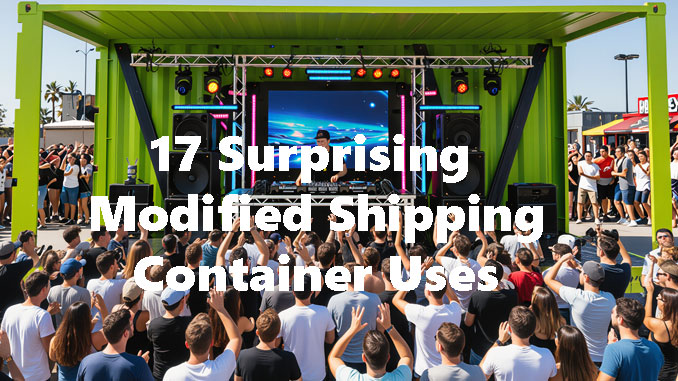
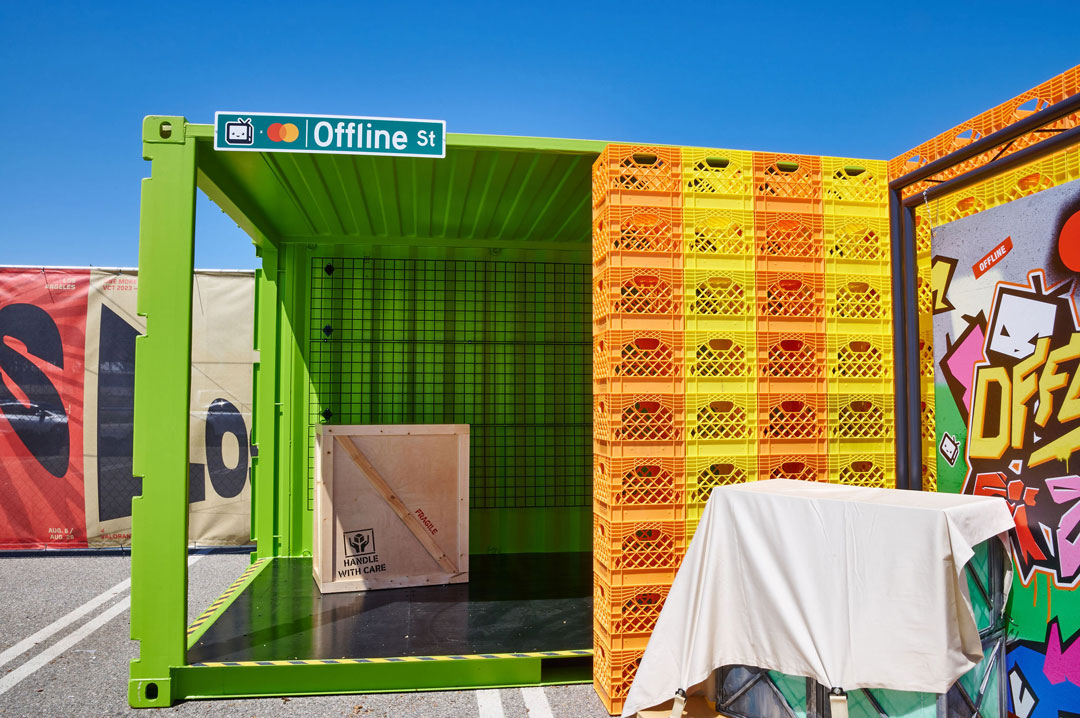
Event marketers just need structures that deploy faster while creating memorable brand experiences. Shipping container ideas meet both requirements through modular designs that transform into exhibition booths, trade show displays, experiential marketing activations and even DJ booths.
Portable Event Solutions
Shipping containers serve as actual event venues for around 45% of event planners now[40]. Setup happens within minutes rather than hours[41]. Hydraulic and electrical systems allow units to lift themselves on and off trailers with doors controlled from central command[42]. Weather-proof construction handles outdoor conditions year-round[41], and secure locking capabilities protect merchandise and equipment between events[42]. Converted containers now serve as bars or food stalls at over 30% of outdoor festivals in urban areas[40].
Branding and Marketing Applications
Customization options include high-quality wrap printing, custom paint colors, vinyl graphics with logos, window installations, and roll-up doors[41][40]. Containers allow customers to experience brands firsthand through experiential marketing and create deeper connections beyond transactional relationships[41]. Containers can be modified with endless possibilities. Applications range from information kiosks and welcome stands to pop-up restaurants and art installations[42].
Setup Flexibility for Different Events
Configuration options span 20-foot to 40-foot dimensions with open wall, retail walk-up, barn door, bi-fold, and drop-down styles[41]. The container atmosphere felt different and memorable, which is why more than 75% of attendees report returning to events[40].
Container Hotels and Guest Accommodations
Travelers who want eco-friendly and architecturally unique experiences are stimulating growth in container-based hospitality. These properties blend industrial esthetics with modern comfort and prove that repurposed shipping containers can deliver luxury among sustainability.
Unique Hospitality Experiences
Flophouze in Round Top, Texas crafts each unit from reclaimed materials. These include wood from New York farms, Philadelphia school windows and bowling alley countertops[8]. DOCK INN Hostel in Warnemünde, Germany features 64 rooms with en suite bathrooms and harbor views. The property also has a rooftop sauna and 550 m² bouldering hall[8]. Tinypod’s Garden Pod at Gardens by the Bay in Singapore is a chance to experience four duplex suites with solar panels, full kitchens and private patios[8]. Reset hotel in Twentynine Palms provides 65 guest rooms with 520-sf standard units and 800-sf suites. Each features private decks, fire pits and stargazing platforms[43]. Nightly rates range from $300 to $700[43].
Stackable Multi-Unit Designs
Modular construction allows configurations from single-unit suites to multi-story complexes[8]. Casinos and resorts deploy containers for instant room inventory during high-traffic events[44].
Amenities and Guest Comfort Features
High-performance insulation, modern HVAC systems and luxurious interiors outfit these properties[8]. Smart space planning maximizes every square foot. Large windows counter compact dimensions[8]. Climate control, soundproofing and full plumbing make spaces indistinguishable from high-end suites[44].
Storage Units and Secure Warehousing
Beyond creative conversions, shipping container ideas serve fundamental storage needs if you have secure, weather-resistant space requirements.
Weather-Resistant Storage Solutions
Marine-grade steel construction withstands extreme conditions containers originally faced during ocean transport. The 14-gage corrugated steel walls resist cutting and drilling attempts[10]. Rust-resistant paint coatings and weather-sealed doors protect contents from rain and humidity[10]. Containers maintain wind and watertight integrity[1], and rubber gaskets create tight seals around cargo doors[45]. Built-in passive vents reduce condensation buildup[45], though you shouldn’t expect moisture-free environments year-round[46].
Security Features and Access Options
Reinforced steel doors with internal locking bars create formidable barriers against theft[10]. Security upgrades include anti-cut and anti-pry locks, steel lockboxes that shield padlocks, and motion-sensor LED lighting[10]. Advanced facilities add CCTV monitoring systems and wireless surveillance with smart card or coded entry access[10]. Some storage yards feature 24/7 electronic surveillance with access-controlled gates[47].
Residential and Commercial Storage Applications
Homeowners use containers during renovations or decluttering projects[48]. Construction contractors protect tools and materials on active jobsites[48]. Business owners store excess inventory and seasonal items[48]. Standard 8×20 units provide 1,172 cubic feet of storage[46]. Pricing for used 20-foot containers ranges from $1,500 to $3,000[9].
Container Playgrounds and Activity Centers
Children’s developmental needs drive playground breakthroughs, and repurposed shipping containers deliver affordable options. These structures prove virtually indestructible and stack like building blocks[3]. They create multilevel play environments that standard plastic equipment cannot match.
Creative Play Structures from Shipping Container Ideas
Shipping container ideas function as blank canvases for playground designers[3]. The steel frames transform into castles, pirate ships, secret lairs and spaceships[17]. They stimulate imagination beyond traditional playground equipment. Phooey Architects designed Skinners Playground using four containers that were repositioned and cut out[17]. Every material was recycled or salvaged. Melbourne hosts this fort-like structure that has a lounge area for homework and hosts painting and dancing classes[17]. Downtown Container Park features a 40-foot container standing vertically with a viewing window at the top[17]. Las Vegas is home to this attraction.
Safety Considerations and Design Elements
Ventilation becomes non-negotiable when you modify containers into playhouses[17]. Comfortable play conditions depend on it. The structures enable supervised risk-taking play[3] and build children’s confidence through controlled challenges.
Community Projects Using Containers
Baltimore’s Kids Safe Zone serves at-risk children ages five to 17. The zone provides homework assistance, meals and gaming spaces[17]. Container playgrounds work especially when you have limited yard space or poor weather. They offer dry, protected play environments year-round[17].
Mobile Gyms and Fitness Studios
Fitness enthusiasts found that repurposed shipping containers could house complete training facilities around 2012. The concept gained substantial media attention by 2015 and 2016[49]. Companies launched dedicated gym pods in 2018[49]. The format now serves backyard personal training rooms, small commercial workout spaces and mobile fitness studios.
Fitness Equipment and Layout Planning
A standard 20-foot container provides approximately 145 to 150 square feet of usable floor area[50]. Interior dimensions measure 19 feet 4 inches in length, 7 feet 8 inches in width and 7 feet 10 inches in height[50]. Strategic space planning divides this footprint into functional zones for strength training, floor work, cardio and storage[50]. Wall-mounted racks, adjustable dumbbells, kettlebells, resistance bands and folding equipment maximize training variety. They maintain clear floor space at the time[50]. Modular rigs support squats, presses, pull-ups and suspension training from compact setups that fold vertically when not in use[50].
Ventilation and Climate Control Needs
Steel containers heat up quickly in direct sun. They retain cold in winter[50]. Insulation for walls and ceiling, louvered vents, exhaust fans and mini-split HVAC systems create comfortable training environments[50][11].
Examples of Container Gym Concepts
Container sizes range from 20-foot units starting at $1,675 to 40-foot containers beginning at $3,300[15]. These support diverse applications from climate-controlled backyard studios to mobile event gyms[51].
Container Bridges and Infrastructure
Infrastructure projects increasingly rely on shipping container ideas for temporary and permanent structural solutions. Containers function as telecommunications base stations, construction site storage units and sound barriers in other instances[16].
Engineering Container Bridge Designs
Bridge fittings enable horizontal container connections. They’re rated for 10 tons safe working load with breaking loads reaching 100 kN[52]. These mechanical elements join containers side-by-side or end-to-end without permanent modifications[52]. Flat-rack containers work especially well for bridge construction in 20-foot and 40-foot configurations. Their walls collapse[53][13].
Structural Benefits and Applications
Corrugated steel construction provides inherent strength for structural applications[16]. Container bridges support loads up to 45 tons[13][12]. They handle pedestrian walkways and light vehicular traffic, beam bridges over waterways, floating bridges, emergency response structures, military deployments and wildlife crossings[53]. Rapid assembly completes simple installations in days rather than weeks or months for traditional bridges[53].
Notable Container Infrastructure Projects
The ECOntainer Bridge in Ariel Sharon Park, Israel spans 160 meters across water and ravine[14]. Yoav Messer Architects designed the structure. It uses 20 and 40-foot containers joined side-by-side, creating double-wide walking paths and observation platforms for light automobile traffic[14].
Conclusion
Shipping containers have evolved way beyond what they were made for. These steel structures now serve 17+ versatile applications that reshape how we build, work and live. They deliver durability, sustainability and substantial cost savings compared to traditional construction methods.
Container homes, mobile cafes, emergency shelters and backyard gyms all offer endless customization possibilities through their modular nature. Not every shipping container idea will suit your specific needs, and that’s perfectly fine.
Identify your main goal first. Then look into which container solution lines up with your budget and timeline. Happy building!
FAQs
Q1. What makes shipping containers suitable for unconventional construction projects? Shipping containers offer unique constructive advantages beyond traditional building methods. Their modular steel structure allows seamless integration of stairs, built-in furniture, and essential systems including plumbing, electrical wiring, HVAC, and specialized installations. The pre-existing framework simplifies customization while maintaining structural integrity.
Q2. How much does a standard 20-foot shipping container typically cost? A used cargo-worthy 20-foot shipping container generally costs between $1,500 and $3,000, while new containers range from $3,000 to $5,000. Prices vary based on condition, location, and market demand. These costs represent just the container itself, before any modifications or customizations.
Q3. Can shipping containers withstand extreme weather conditions like tornadoes? Shipping containers demonstrate impressive weather resistance, withstanding winds up to 130-150 miles per hour, which covers most severe storms and hurricanes. Their corrugated steel construction and low profile make them more stable than many traditional structures. However, proper anchoring and foundation work remain essential for maximum safety in extreme weather zones.
Q4. What items should be avoided when storing goods in a shipping container? While shipping containers provide secure, weather-resistant storage, certain items require special consideration. Avoid storing temperature-sensitive materials without climate control, as steel containers can experience significant temperature fluctuations. Proper ventilation is important to prevent condensation buildup that could damage moisture-sensitive items.
Q5. How quickly can container-based structures be deployed compared to traditional construction? Container structures offer significantly faster deployment than conventional building methods. Most container projects complete 30-50% faster, with some installations ready within days rather than months. For example, container offices deploy in weeks, while traditional construction takes 4-6 months. Pre-fabricated modifications further accelerate the timeline.
HOW RCS CUSTOM EXHIBITS CAN HELP YOU BUILD A MODIFIED CONTAINER
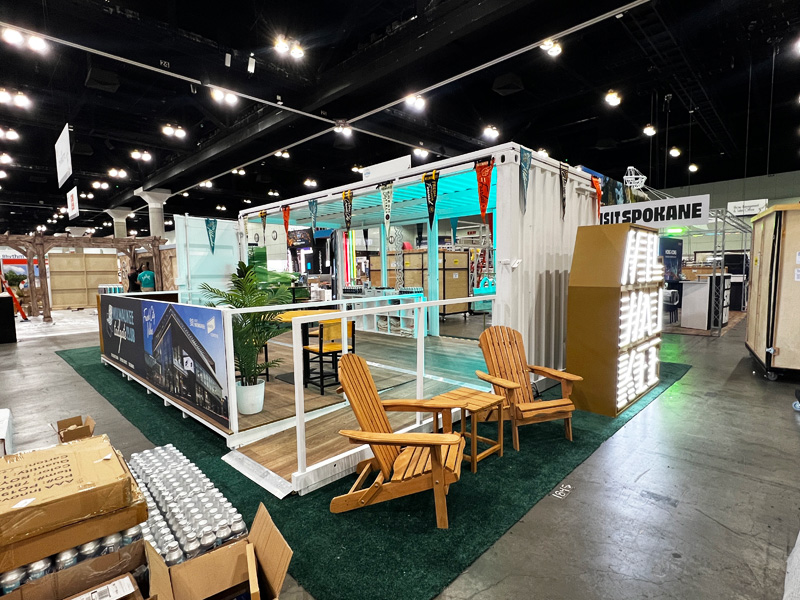
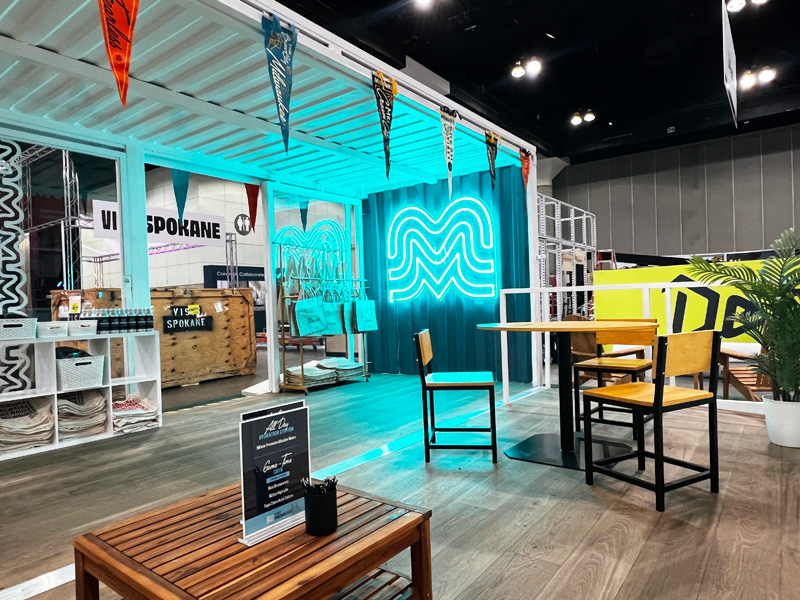
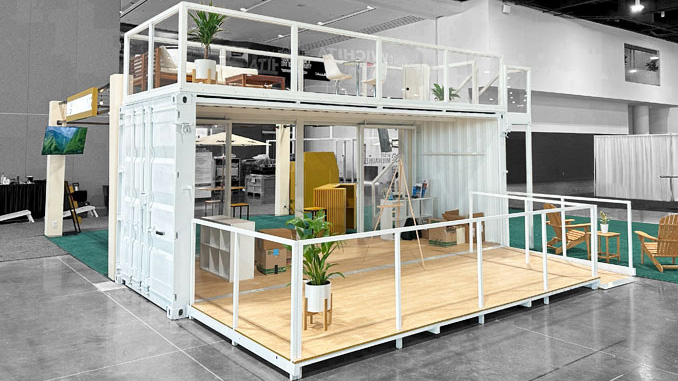
Using the latest CNC (computer Numerical Control) technology, our expert engineers, craftsmen and builders can personalize your container according to your needs, including cutting, wielding, painting, creating 3D signs and more. An extensive knowledge of materials and processes will help us determine the best cost-effective solution to bring your project to life according to your budget.
Our customers have been trusting our company for years and we have been providing custom builds for major trade shows, Hollywood premieres, private events and businesses from Los Angeles to Las Vegas and nationwide. Check out our modified shipping container portfolio here ->
Looking For A Modifed Shipping Container?
Call our Expert at 323-378-6975 or Email us


References
[1] – https://containertech.com/articles/how-to-prepare-storage-containers-for-bad-weather/[2] – https://www.advancedcontainer.com/shipping-container-modification/shipping-container-workshops/
[3] – https://containertech.com/articles/playground-containers/
[4] – https://peakprimalwellness.com/blogs/wellness/shipping-container-sauna?srsltid=AfmBOoo9DiTS6-Fs5h1OlsSh743v9LrSWBDB_HBIWbimr4fxveqZD16B
[5] – https://www.conexwest.com/blog/emergency-shelter-shipping-container-features-dimensions-addons-costs
[6] – https://www.axcessbox.com/shipping-container-disaster-recovery-emergency-shelters/
[7] – https://www.freightfarms.com/container-farming
[8] – https://usacontainers.co/blogs/repurposing-shipping-containers/the-global-rise-of-shipping-container-hotels?srsltid=AfmBOop8fmgiodW8_SRH2y9sifsFwjQ3QyXoqeefrY2PVefMXkeeSg69
[9] – https://www.conexwest.com/shipping_containers_for_sale_in_los_angeles
[10] – https://www.cmgcontainers.net/secure-store-containers-for-equipment-and-tools
[11] – https://www.axcessbox.com/shipping-container-gym/
[12] – https://www.tigershippingcontainers.com.au/shipping-container-bridges/
[13] – https://ismcontainers.com/ever-thought-of-shipping-container-bridges/
[14] – https://www.falconstructures.com/blog/portable-storage-container-makes-permanent-bridge
[15] – https://www.conexwest.com/blog/how-can-i-build-home-gym-shipping-container-conexwest
[16] – https://www.oceancontainer.com/in_the_news/shipping-containers-in-construction-and-infrastructure-a-modern-solution-for-sustainable-development
[17] – https://containerone.net/blogs/news/shipping-containers-enriching-children-s-lives?srsltid=AfmBOooPUAd7ieTQ4Si5HJeKcy9AINw2lH4qc9zxMIugoUntp7JN5cgZ
[18] – https://www.advancedcontainer.com/shipping-container-modification/disaster-relief-shipping-containers/
[19] – https://www.mobilemodularcontainers.com/resources/disaster-relief
[20] – https://www.karmod.com/en/blog/setting-up-an-art-studio-with-container-structures/
[21] – https://goipme.com/3-reasons-why-you-should-make-art-in-a-shipping-container-studio/
[22] – https://www.sculleydesign.com/single-post/art-studio-build-converting-a-40ft-shipping-container
[23] – https://archello.com/project/container-studio
[24] – https://containerone.net/blogs/news/shipping-container-art-studios?srsltid=AfmBOopVt0__Zg20H9QMLpd7Qt8gWwPqLF-hQMiNgSSE0nLPofKmvEAK
[25] – https://www.reddit.com/r/Sauna/comments/19446rs/we_made_a_shipping_container_sauna/
[26] – https://midstatecontainers.com/blogs/news/shipping-container-sauna-conversion-explained?srsltid=AfmBOoowVvl1yr9YDzgQrrGvWChTebFpTBa2YnAQVMuXCNq99JTLo1JH
[27] – https://igrownews.com/shipping-containers-a-sustainable-solution-for-indoor-farming/
[28] – https://farmboxfoods.com/the-many-benefits-of-container-farming/
[29] – https://www.growdynamics.co.uk/pages/container-farming
[30] – https://www.oceancontainer.com/in_the_news/hydroponic-farming-in-shipping-containers-a-revolution-in-urban-agriculture
[31] – https://containertech.com/articles/creative-uses-temperature-controlled-mobile-workshop/
[32] – https://www.aluratrailer.com/mws/mws_container.php
[33] – https://www.aluratrailer.com/news/containerized-mobile-workshop.php
[34] – https://universal-containers.com/news/shipping-container-workshop-design-ideas/
[35] – https://www.conexwest.com/blog/shipping-container-school-classrooms-conexwest
[36] – https://boxhub.com/blog/benefits-of-shipping-containers-for-schools-and-education?srsltid=AfmBOoqUKneLgiIhGhYR6bOv0–2GQo-b8RrdF9k6lTd8018InjDUbnH
[37] – https://www.jakecontainers.com/benefits-of-storage-containers-for-schools-education/
[38] – https://www.conexwest.com/blog/classrooms-box-how-shipping-containers-are-reshaping-education
[39] – https://usacontainers.co/blogs/repurposing-shipping-containers/shipping-containers-as-learning-spaces-in-u-s-schools?srsltid=AfmBOoo1TqgucE2ffY0mWPxXvueAGX1hHsyr6IpAIOlXQYZIEOy9QpFv
[40] – https://blog.siteboxstorage.com/ways-to-use-shipping-container-special-event
[41] – https://expomarketing.com/shipping-container-trade-show-displays/
[42] – https://steelspaceconcepts.com/experiential-marketing-definition/
[43] – https://www.forbes.com/sites/jimdobson/2025/01/20/a-stunning-shipping-container-hotel-opens-in-the-california-desert/
[44] – https://www.iport.com/shipping-container-news/shipping-container-hospitality-designing-the-future-of-guest-experiences/
[45] – https://www.falconstructures.com/blog/are-shipping-containers-waterproof
[46] – https://www.seattleshippingcontainerstorage.com/
[47] – https://evansdeliverydallas.com/solutions/container-storage/
[48] – https://proboxportablestorage.com/storage-containers-for-rent/secure-storage-containers/
[49] – https://universal-containers.com/news/shipping-container-gym-ideas/
[50] – https://www.conexwest.com/blog/20ft-shipping-container-gym-layout-equipment-cost
[51] – https://midstatecontainers.com/blogs/news/shipping-container-gym-ideas?srsltid=AfmBOoqrC9Pt48Nqy2MVlhTI7sayJJsHx3YhKbcf-gMtAnGAzSbvYfAP
[52] – https://hz-containers.com/en/news/bridge-fitting-for-shipping-container/
[53] – https://www.conexwest.com/blog/shipping-containers-repurposed-into-functional-bridges
[54] – https://onsitestorage.com/shipping-container-uses/?srsltid=AfmBOoqsftGuM-lSdCJ7arEeiK-QVtr9MJ28sVaP94NiXnCjEU458nJf
[55] – https://denholmgoodlogistics.com/10-amazing-uses-shipping-container/
[56] – https://containerone.net/blogs/news/shipping-container-homes?srsltid=AfmBOooA5pIUS-TOqXotWXijAcpK9AVY6nNjcOqnllmOaaiinhZHOhZE
[57] – https://sonicsteel.com.au/ultimate-guide-to-customising-interiors-of-shipping-container-houses/
[58] – https://www.a2oproperties.com/top-5-features-of-a-luxury-shipping-container-house/
[59] – https://www.247pro.com/blog/how-much-does-it-cost-to-build-a-container-home
[60] – https://www.discovercontainers.com/shipping-container-home-construction-timeline-example/
[61] – https://goipme.com/famous-shipping-container-shops-and-restaurants/
[62] – https://ems-llc.com/6-viable-pop-up-store-ideas-made-possible-with-shipping-containers/
[63] – https://skymaxcontainers.com/shipping-container-pop-up-stores/
[64] – https://www.thestorefront.com/mag/city-funded-shipping-container-pop-ups-helping-local-brands-thrive/
[65] – https://www.securecontainer.ca/10-stores-used-shipping-containers-stand/
[66] – https://a-american.com/container-conversions-for-retail/
[67] – https://www.cassone.com/blog/why-are-businesses-moving-to-shipping-container-offices/
[68] – https://www.conexwest.com/blog/shipping-container-modifications-complete-guide
[69] – https://www.ecopool.com/container-pools/?srsltid=AfmBOoqOXMBOsl0GA4VpwpVpCPk-6OwHdKlXvQwcehEL8fyyfPkZhf6l
[70] – https://homeguide.com/costs/shipping-container-pool-cost
[71] – https://www.conexwest.com/blog/guide-building-shipping-container-swimming-pool
[72] – https://midwestcontainerpools.com/blog/how-much-are-container-ship-pools-cost-breakdown
[73] – https://www.ecopool.com/diy-container-pool/?srsltid=AfmBOoppiBRNbQzZaG6081ZqZPw1k0om3nTwxNt4zo_1ngV88i9M_b6q
[74] – https://www.modularculinaire.com/blog/shipping-container-kitchen-planning-design-guide
[75] – https://www.modularculinaire.com/blog/shipping-container-restaurant-advantages
[76] – http://www.landcontainers.com/restaurants-in-shipping-containers-a-smart-modern-dining-concept/
[77] – https://www.hugghallmobilestorage.com/five-shipping-container-business-ideas-for-foodies/
[78] – https://www.tradecorp-usa.com/blog/build-and-maintain-shipping-container-restaurant/
[79] – https://www.container-xchange.com/blog/shipping-container-restaurants
[80] – https://www.webstaurantstore.com/article/11/restaurant-kitchen-layouts.html?srsltid=AfmBOorLCGa1u2jxP_gl2cuh-lpnN3xdaSH5MJ63XfBEdVKe533q2-Hl
[81] – https://www.tradecorp-usa.com/blog/container-cafe-design-ideas-and-utility-plans-a-guide/