Customizable Container Solutions: Your Complete Guide to Smart Space Design
Around 27.4% of global shipping containers get customized each year, and businesses are learning why customizable container solutions are revolutionizing how we think about space design. The process of modifying a shipping container can feel overwhelming, but the benefits are compelling. Organizations using custom storage containers report 39.8% increased storage efficiency, while the average lead time for production is 18.3 days.
You need customized shipping containers for offices or specialized facilities, and understanding your options matters. This piece will walk you through available customizable containers and design possibilities including branded shipping containers. We’ll cover features like climate control and what to expect at the time you learn about modified shipping containers for sale.
Types of Customizable Containers Available
Customizable containers come in distinct configurations. Each one is designed for specific operational needs. Choosing the right type depends on your intended use, space requirements, and feature needs.
Standard modified storage containers
Standard modified storage containers are the foundations for most projects. These units accept modifications that include shelving systems, roll-up doors, ventilation systems, and custom paint finishes. Roll-up doors provide space-saving access for frequent entry. Partition walls create separate compartments within a single unit [1]. Security upgrades include lockboxes welded onto doors and heavy-duty cargo door locks [2]. You can add windows for natural light and skylights for improved visibility. Various flooring options are available from industrial-grade epoxy to vinyl [1].
Mobile office containers
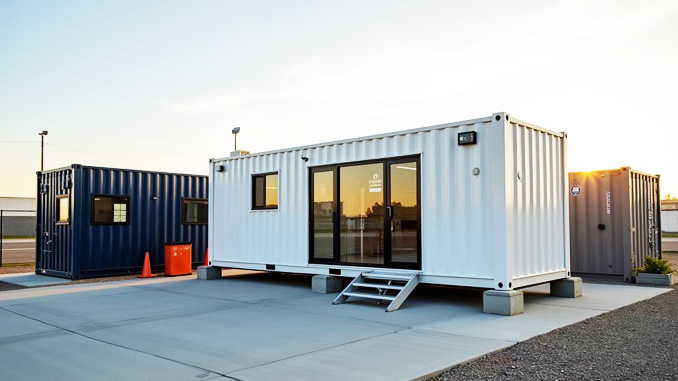
Mobile office containers arrive finished and ready for occupancy [3]. Sizes range from compact 8’x10′ units up to 8’x40′ configurations. They offer 160 to 320 square feet of workspace [3]. These units have steel entry doors with deadbolts, horizontal sliding windows with guards, pre-finished wall panels, and tile flooring [3]. Climate control systems provide year-round comfort through integrated heating and air conditioning [3]. The 40ft mobile office container functions as a self-contained workspace constructed from new, one-trip standard dry shipping containers [3]. You can specify combination office/storage units that split layout between workspace and equipment storage [3].
Portable workshop containers
Workshop containers transform into functional work environments with built-in features. A 20ft container workshop has 3-tier shelving rated to 400kgs, single-phase wiring, energy-efficient lighting, and available power outlets [4]. These units measure approximately 5,898mm internal length with 2,700mm height [4]. Double doors on both ends and sides allow equipment access [5]. Workbenches and tool racks protect equipment from theft. Lockable cages provide organized storage for trades [4].
Security and guard station containers
Security containers accommodate personnel monitoring entry points and perimeters. Standard units range from 10-foot to 40-foot lengths, with extra-wide options available [6]. Climate-controlled units ensure year-round comfort for security staff. Office/storage combination models allow workspace and equipment protection in a single 20-foot or 40-foot unit [6].
Specialized laboratory containers
Laboratory containers support medical testing, environmental research, and field operations. These units feature modular layouts that include cleanroom, wet lab, and dry lab configurations [7]. Advanced HVAC systems maintain environmental control. Chemical-resistant work surfaces handle demanding applications [7]. Container capacities range from 1 mL to 10 L for diagnostic testing systems [8].
Design and Customization Options for Your Space
Containers function as blank canvases with endless possibilities to create customized shipping containers for any purpose [3]. Empty steel shells transform into practical spaces with careful thought about storage, partitions, appliances and furnishings [3].
A blank slate design to start
You can approach customization through four distinct paths. Quick ship structures arrive ready for immediate use, while pre-designed floor plans offer proven configurations for rapid construction [3]. So you can adapt existing floor plans with adjustments tailored to your specifications, or start from the ground up and develop a custom container [3]. Each approach scales to meet project needs, whether ordering a single unit or multiple containers [3].
Popular modular configurations
Modular shipping container systems stack vertically or join horizontally to expand space. Multi-container configurations create larger integrated areas through side-by-side arrangements or complex shapes [9]. Internal partitions or open-plan formats adapt to specific project requirements, while interconnected containers work for offices and living quarters [9].
Interior partitions and fast walls
Divider walls convert one large container into separate compartments without welding [10]. These bolt-on systems install in under 30 minutes using pressure-fitted feet that secure into container wall corrugations [10] [4]. The 16-gage corrugated steel construction weighs 130 lbs per section and measures 90 inches high by 44 inches wide [4]. Partitions remove cleanly and leave no permanent modifications to the container structure [4].
Door and window additions
Window options have sliding, casement, awning and fixed styles [5]. Double-pane windows come in 2ft x 3ft and 3ft x 3ft sizes with optional security bars [2]. Door modifications range from personnel entries and roll-up doors to sliding glass and cargo doors [11]. Each window kit has a frame system designed for container modifications and installs in about one hour [12].
Exterior modifications and branded shipping containers
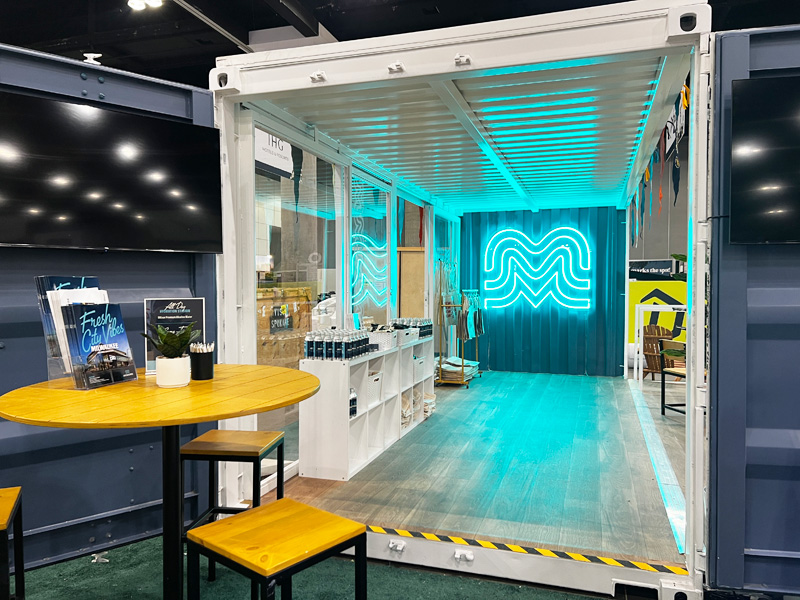
Custom paint finishes match over 15,000 colors from major brands [13]. Marine-grade industrial enamel provides durability and weather protection [2]. Branded shipping containers display company logos, colors and designs for customer-facing applications [14].
Essential Features: Climate Control, Materials, and Security
Climate control, quality materials and reliable security turn simple steel boxes into functional customizable containers that protect contents and personnel year-round.
Insulation and temperature control systems
Uninsulated steel containers reach 130°F in direct sun. They produce several gallons of condensation daily in humid climates [6]. Closed-cell spray foam delivers R-6 per inch and bonds to corrugated steel walls. It costs $3,000 to $5,500 for a 20-foot container [6]. Rigid foam board offers R-5 per inch at lower cost, ranging from $1,200 to $2,500 for 20-foot units [6]. Insulation cuts HVAC loads by 40 to 60%. This allows smaller systems that cycle instead of running continuously [6].
HVAC installation options
PTAC units provide 15K cooling power for single containers and match the compact systems found in hotel rooms [15]. Mini-split systems operate at 18 to 25 SEER efficiency and work down to 5°F ambient temperature [6]. A 20-foot insulated container in moderate climates needs 9,000 BTU. The same unit uninsulated in hot climates requires 18,000 to 24,000 BTU [6]. Through-wall units range from 7,000 to 15,000 BTU with installed costs between $1,100 and $2,100 [6].
Construction materials and durability
Customized shipping containers use Corten steel that forms a protective rust layer to resist corrosion [16]. Marine-grade plywood floors measure 1-1/8 inches thick over steel crossbeams [16]. One-trip containers surpass 25 years of use, and used containers exceed another 10 years after shipping service [17].
Security upgrades and locking systems
Lockboxes shield padlocks from bolt cutters and saws [8]. Slam locks feature 4 locking points with electrophoretic paint coating for corrosion resistance [7]. Claw locks deliver 1.5 tons of locking pressure per point, totaling 6 tons across 4 points [7]. Lock box locks withstand up to 9 tons of pressure resistance [7].
Planning Your Custom Container Project
Project success depends on understanding four planning elements before you commit to custom storage containers.
Understanding cost factors and pricing
Base container price moves based on size and condition. A 10-foot container costs less than a 40-foot unit [3]. Customization complexity drives the biggest cost variable [3]. Simple modifications like shelving cost little, while extensive builds with plumbing, HVAC, electrical, insulation and interior finishing run much higher [3]. Size matters beyond base cost since larger containers need more insulation, more HVAC capacity and more materials [3]. Features and amenities add up, with every window, door, outlet and fixture increasing price [3]. Quality of materials and finishes affects pricing, as does labor for customization work [3]. Delivery and placement costs depend on distance and site conditions [3].
Delivery and site preparation requirements
20-foot containers require 80 feet of straight, forward placement, while 40-foot containers need 100 feet [18]. You need 15 feet of vertical clearance along the full delivery path and placement area [18]. The ground needs to be level and firm enough to support container weight [3]. Gravel beds, concrete pads or blocks work as foundation options [3]. Delivery trucks need room to maneuver with clear space to slide the container off [3].
Choosing the right customization provider
Experience with shipping container modifications should top your evaluation criteria [3]. A company’s portfolio of past projects shows what they can deliver [3]. Customer service and support matter throughout and afterward, with responsive communication keeping projects on track [3].
Timeline expectations for modified shipping containers for sale
The average lead time for custom container production is 18.3 days [3]. Standard modifications take 3-4 weeks [19]. Complex builds may take longer depending on modification scope [3].
Conclusion
Customizable container solutions offer flexibility that traditional construction can’t match. Production takes an average of 18.3 days and storage efficiency gains reach nearly 40%. Modified containers deliver practical results quickly. You might need mobile offices, secure workshops or branded retail spaces. The right customization provider can transform a steel box into what your operation needs. Define your requirements first and then match them to the container type and features that fit your budget and timeline.
FAQs
Q1. What types of customizable containers are available for different business needs? There are several types available including standard modified storage containers with shelving and ventilation, mobile office containers that come fully finished with climate control, portable workshop containers with built-in workbenches and tool storage, security guard station containers for monitoring entry points, and specialized laboratory containers with cleanroom configurations and chemical-resistant surfaces.
Q2. How long does it take to get a custom container delivered? The average production lead time for custom containers is approximately 18.3 days. Standard modifications typically take 3-4 weeks to complete, while more complex builds with extensive features like plumbing, HVAC, and specialized interior finishing may require additional time depending on the scope of customization.
Q3. What insulation options are available for temperature control in containers? Two primary insulation options are closed-cell spray foam, which provides R-6 per inch and costs $3,000 to $5,500 for a 20-foot container, and rigid foam board offering R-5 per inch at a lower cost of $1,200 to $2,500. Proper insulation can reduce HVAC loads by 40 to 60% and prevent condensation issues.
Q4. What site preparation is needed before container delivery? You’ll need a level, firm ground surface with adequate support, which can be achieved with gravel beds, concrete pads, or blocks. A 20-foot container requires 80 feet of straight placement space, while a 40-foot container needs 100 feet. Additionally, plan for 15 feet of vertical clearance along the entire delivery path and enough room for the delivery truck to maneuver.
Q5. What factors affect the cost of a custom container project? Cost depends on several factors including the base container size and condition, complexity of customization work, quality of materials and finishes, number of features and amenities (windows, doors, outlets), labor costs, and delivery distance. Basic modifications like shelving are relatively inexpensive, while extensive builds with full electrical, plumbing, and HVAC systems cost significantly more.
HOW RCS CUSTOM EXHIBITS CAN HELP YOU BUILD A MODIFIED CONTAINER FOR YOUR RETAIL STORE
Using the latest CNC (computer Numerical Control) technology, our expert engineers, craftsmen and builders can personalize your container according to your needs, including cutting, wielding, painting, creating 3D signs and more. An extensive knowledge of materials and processes will help us determine the best cost-effective solution to bring your project to life according to your budget.
Our customers have been trusting our company for years and we have been providing custom builds for major trade shows, Hollywood premieres, private events and businesses from Los Angeles to Las Vegas and nationwide. Check out our modified shipping container portfolio here ->
Looking For A Customized Container?
Call our Expert at 323-378-6975 or Email us


References
[1] – https://midstatecontainers.com/collections/container-modifications?srsltid=AfmBOopmlAYet28nHTzGAblyrKZGvKKSROv8JRihahcEGI5CdXhyrh6h[2] – https://containertech.com/container-modifications/
[3] – https://blog.siteboxstorage.com/customized-shipping-containers
[4] – https://instacontainermodification.com/products/category/Divider+Walls
[5] – https://containerstop.com/blog/shipping-container-windows-options-installation-and-design-ideas/
[6] – https://www.mobilemodularcontainers.com/blog/shipping-container-heating-cooling
[7] – https://www.seguratainer.com/seguratainer-locks
[8] – https://containertech.com/articles/container-locks/
[9] – https://www.prefabex.com/our_galleries/modular-container-structures-by-build-type
[10] – https://www.myteeproducts.com/partition-wall-for-shipping-container.html?srsltid=AfmBOoo3RAyDdeuIddb_XaOlybVMzmfEmdb15SEe8C9cHA3Q-1zq0gqn
[11] – https://www.advancedcontainer.com/shipping-container-modification/shipping-container-doors-and-windows/
[12] – https://containerone.net/products/windows?srsltid=AfmBOoqFRYWCHkoSDrsBlm7ldGOxXpE_JF9ZS8ObBWxZ79JbkXTuJ1LD
[13] – https://www.falconstructures.com/shipping-container-modifications
[14] – https://www.tptrailersinc.com/storage-containers/custom-storage-containers
[15] – https://www.falconstructures.com/blog/shipping-container-air-conditioning
[16] – https://www.eagleleasing.com/what-are-shipping-containers-made-of/
[17] – https://containertech.com/articles/how-durable-are-shipping-containers/
[18] – https://boltedbox.com/container-delivery-requirements-site-access-prep/
[19] – https://esequipsales.com/shipping-container-modifications-guide/